Wardrobes have to stay quiet. They are opened every day, filled with fabric, exposed to air-conditioning cycles, humidity, luggage, shoes and cleaning routines, yet buyers only notice them when something goes wrong. A door starts to bow. A drawer rubs. A damp corner develops a smell. In coastal homes, hotel suites and high-use apartments, those small failures can become expensive to correct after installation.
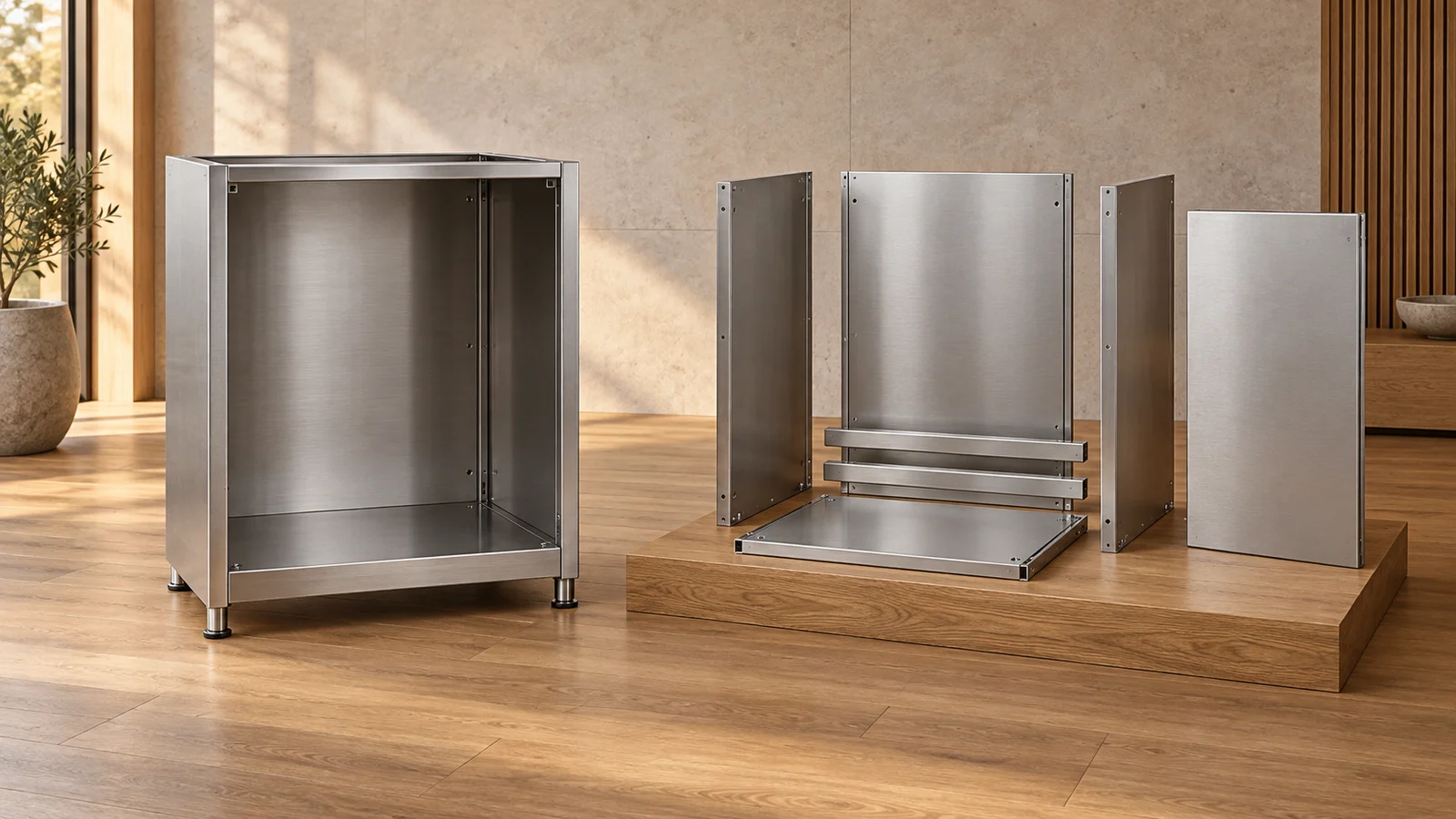
Stainless steel changes the storage brief. Instead of relying on a wood-based core that must be protected from moisture, the cabinet body begins with a non-porous, dimensionally stable material.
Build Around Humidity
Wood, MDF and particleboard can perform well in the right setting, but they remain sensitive to moisture at cut edges, screw holes and damaged surfaces. Once swelling begins, the problem is no longer only visual; it can affect door alignment, drawer movement and the way hardware sits in the cabinet.
A stainless steel wardrobe does not absorb water in the same way. For humid villas, serviced apartments and hospitality interiors, that stability is the main point. Buyers should still review ventilation, wall conditions and cleaning routines, but the cabinet material itself is not fighting the room.
Specify the Parts You Touch Every Day
The visible finish matters, but the working parts decide whether the wardrobe feels refined after years of use. Drawer boxes, folded edges, hanging rails, hinges, handles, shoe shelves and tall door panels should all be considered as one storage system.
For Zovia’s wardrobe range, the practical questions are simple: what will hang, what will fold, what needs drawers, what needs open access, and where luggage or seasonal storage should live. A good layout reduces stress on the hardware because every zone has a clear job.
Keep the Dressing Room Warm
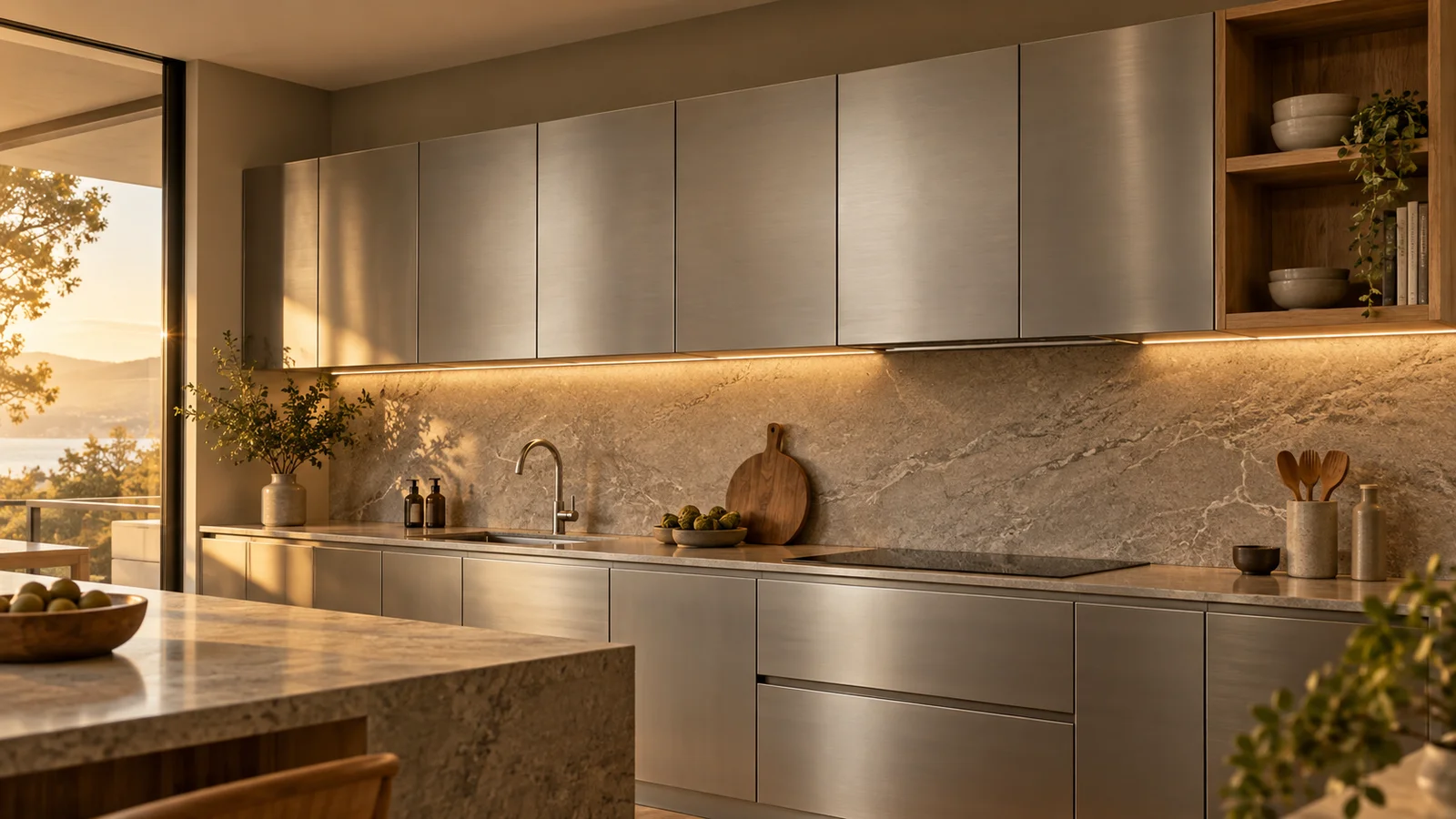
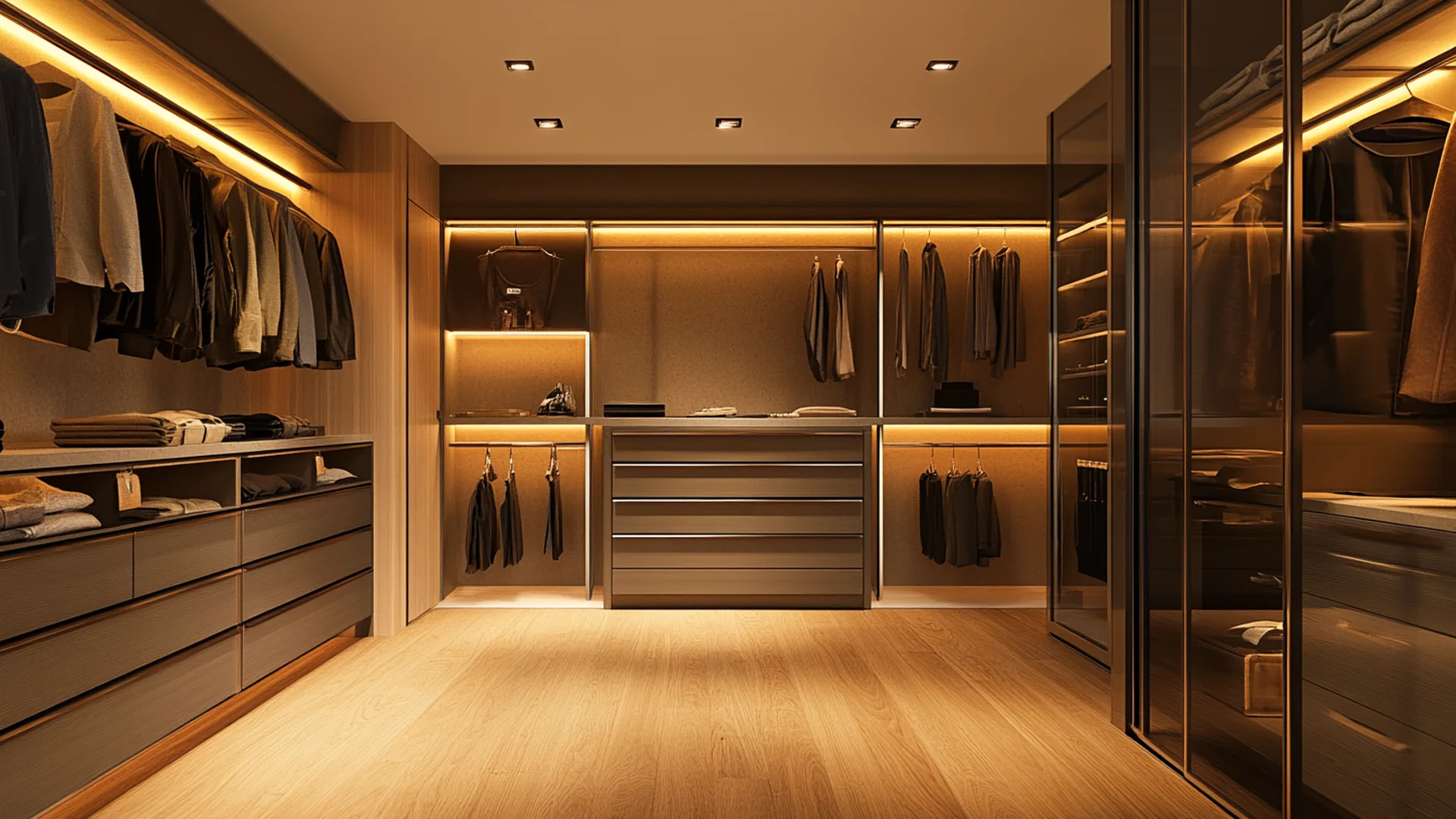
Stainless steel wardrobes do not need to look cold. A brushed surface is usually more residential than mirror polish because the grain softens reflections and hides small handling marks. Warm lighting around 2700K to 3000K, timber flooring, fabric wall panels, glass doors and leather or linen accessories can make the metal feel calm rather than clinical.
A wardrobe should feel stable before it feels decorative.
The strongest interiors let the material do its work quietly. Steel gives the room a precise storage structure; lighting and soft materials give it atmosphere.
Match the Project Type
A private dressing room, a hotel wardrobe wall, a rental apartment closet and a coastal villa suite do not need the same specification. Some projects prioritize easy cleaning. Others need many repeated units, clear maintenance access or a more tailored visual finish. Where chloride exposure or unusually damp conditions are part of the brief, material grade and surface finish should be discussed project by project.
That is where Zovia’s broader indoor cabinetry system helps. Wardrobes can be planned with bathroom storage, bedroom cabinets and other product categories so the material logic stays consistent across the interior.
When the storage plan, finish, lighting and site conditions are considered together, stainless steel becomes more than a durable alternative. It becomes a calm foundation for wardrobes that keep their shape, keep clean and keep working long after the first installation photo.