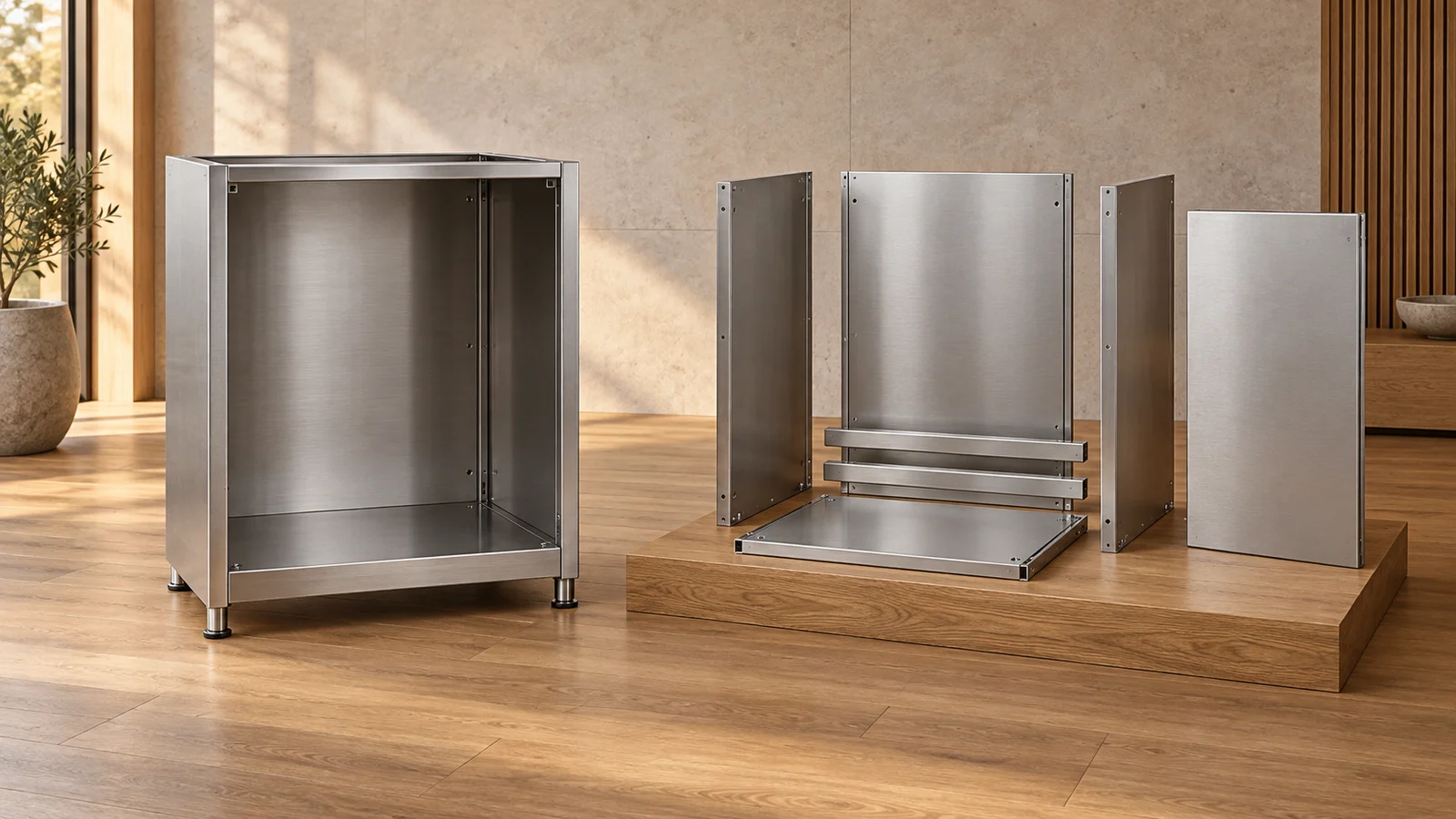
Small cabinet details are easy to miss in a rendering. A kitchen elevation may show the right finish and worktop direction, while the edges, seams and reveal gaps remain vague. On stainless steel cabinetry, those small lines matter because they catch light every day.
For overseas buyers, edge and seam review is not about adding decoration. It is about making sure the finished cabinet reads precise, cleans easily and matches the approved drawings when it reaches site.
Read the edge before the door
A stainless steel cabinet door is more than a flat metal face. The return at the edge affects strength, shadow and how refined the door looks from the side. A soft, consistent folded edge usually feels calmer than a sharp exposed line, especially in residential kitchens where people pass close to the cabinets.
Buyers should review the sample from more than one angle. Look at the top, side and lower edge, not only the front photo. If the project includes a custom kitchen cabinet run, the edge language should stay consistent across base cabinets, tall cabinets and loose panels.
Control where seams appear
Seams are not automatically a problem. Poorly placed seams are. A visible joint can be acceptable when it follows the cabinet rhythm, aligns with a door split or sits where cleaning access is clear. It becomes distracting when it cuts across a broad visible plane without purpose.
Ask how large panels, returns and worktop interfaces will be divided. If a long run needs more than one piece, the drawing should show where the joint sits. This is important for brushed stainless steel because light reveals small changes in plane.
A good seam should look intentional before it looks invisible.
Match grain direction and reveal lines
Brushed stainless steel has direction. If two neighbouring faces use different grain directions without a reason, the cabinet can look patchy even when the material is correct. Buyers should confirm the intended brushing direction for doors, drawer fronts, side panels and visible filler pieces.
Reveal gaps need the same discipline. Door lines, drawer lines and panel joints should support the design grid rather than drift from one module to the next. A clean drawing package should make the opening direction, panel split and visible grain direction easy to understand.
Keep cleaning in the detail
Edges and seams are also cleaning details. Deep dirt traps, awkward overlaps and inaccessible grooves can make a cabinet harder to maintain. Stainless steel helps because the surface is non-porous and washable, but the construction still needs to avoid unnecessary collection points.
For indoor cabinet projects, ask which edges will be exposed to daily touch, mopping, cooking residue or water around sinks. For outdoor or utility areas, share the exposure and cleaning routine so the cabinet detail can be discussed against the real use.
What to approve with Zovia
Before production, review edge samples, seam locations, brushed grain direction, door gaps and special exposed panels. Photos are useful, but shop drawings should carry the same decisions so the factory and project team work from one reference.
Zovia can help overseas buyers turn these details into a clear approval package. Share the cabinet layout, finish direction, sample expectations and site context, and our factory team will review the visible construction details before production begins.