Bathrooms are hard on cabinetry. Steam, splashed water, cosmetics, towels, cleaning products, and daily temperature changes all meet in a compact room. A vanity that looks refined on the first day can start to swell, stain, or smell musty if the core material was never meant for that environment.
Stainless steel changes the question. Instead of treating moisture as a problem to hide from, it gives the vanity a non-porous cabinet body that can live comfortably with humidity.
Build the cabinet around moisture
Wood-based vanities often depend on coatings, edge banding, and careful sealing to keep moisture out. Once water finds a weak edge, the problem can move into the substrate. Stainless steel does not work that way. The surface is solid, washable, and not dependent on a decorative skin to stay stable.
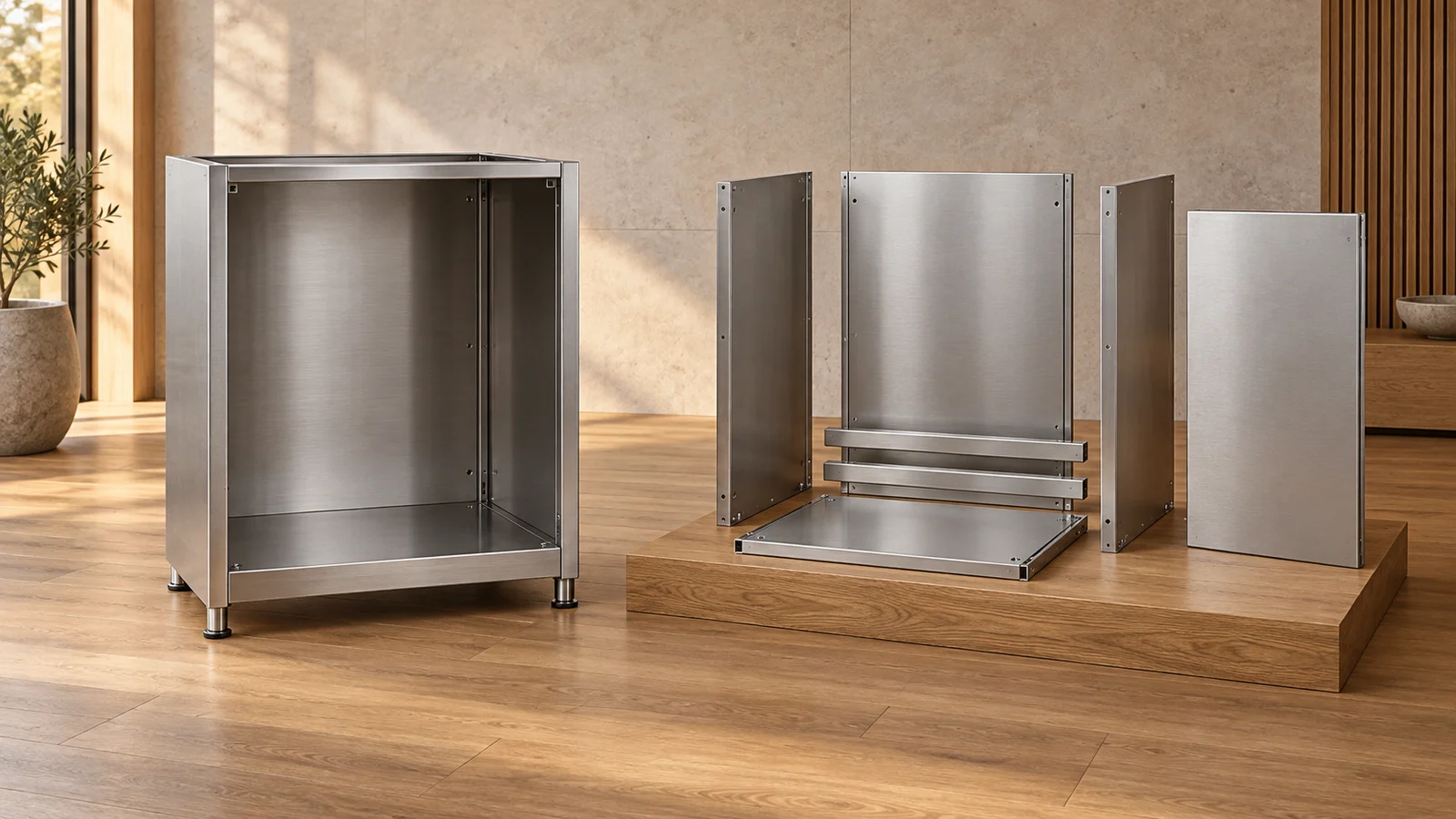
For bathroom use, the important details are the places buyers do not always see first: the inside of drawers, folded edges, rear panels, sink cut-outs, and the floor contact area. A good vanity should be designed so water can be wiped away, corners can be reached, and the cabinet remains easy to clean after years of use.
Keep the room warm, not clinical
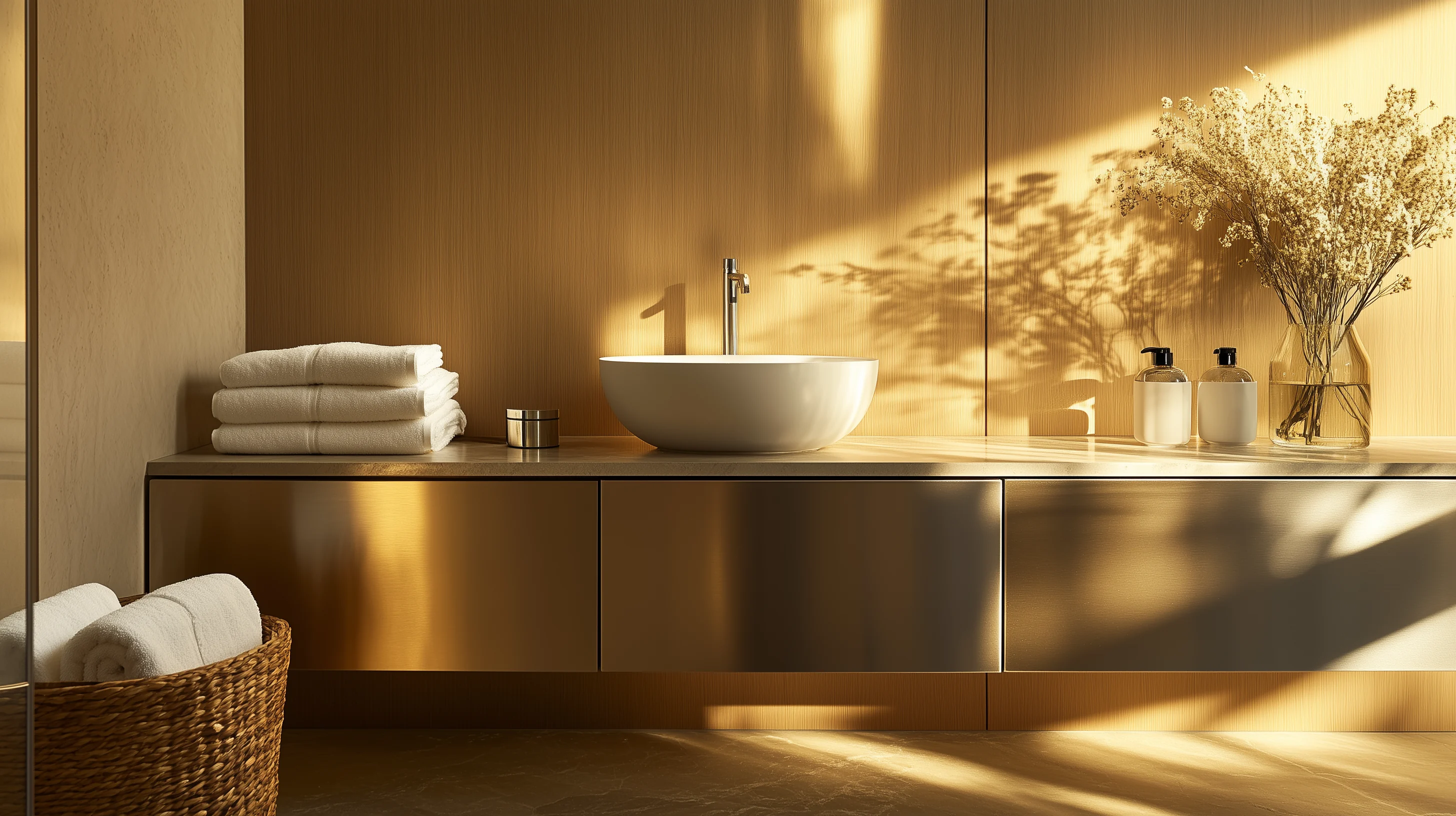
A stainless steel bathroom does not have to feel like a hotel back-of-house space. The finish, lighting, and surrounding materials decide the mood. A brushed surface is usually better than mirror polish because the linear grain softens reflections and hides small handling marks more gracefully.
Warm light around 2700K to 3000K, stone or porcelain surfaces, timber wall panels, linen towels, and a simple vessel basin can make the metal feel calm rather than cold. Zovia’s bathroom vanity range is planned around that balance: durable material first, then a visual language that still belongs in a private interior.
The best bathroom vanity is the one that treats humidity as a design condition, not an afterthought.
Specify for the actual site
Not every bathroom has the same risk level. A powder room, a family bathroom, a spa suite, and a coastal villa all expose cabinetry differently. The specification should consider ventilation, cleaning frequency, water splash zones, and whether salt air or pool chemicals may be present nearby.
304 stainless steel is widely used for indoor cabinetry. Where chloride exposure becomes a concern, 316 stainless steel may be discussed because its molybdenum content improves resistance to chloride corrosion. The right choice should follow the site, not a generic material label.
Think beyond the vanity alone
The vanity is only one part of the room. Tall storage, mirror cabinets, laundry cabinets, and adjacent bedroom or dressing storage may need the same moisture-aware thinking. Coordinating the bathroom with Zovia’s indoor stainless steel cabinetry can help buyers keep material logic consistent across a residence, hotel suite, or apartment project.
When the cabinet body, finish, lighting, and surrounding surfaces are specified together, stainless steel becomes more than a practical answer to humidity. It becomes a quiet, durable foundation for a bathroom that stays clean, composed, and easy to live with.