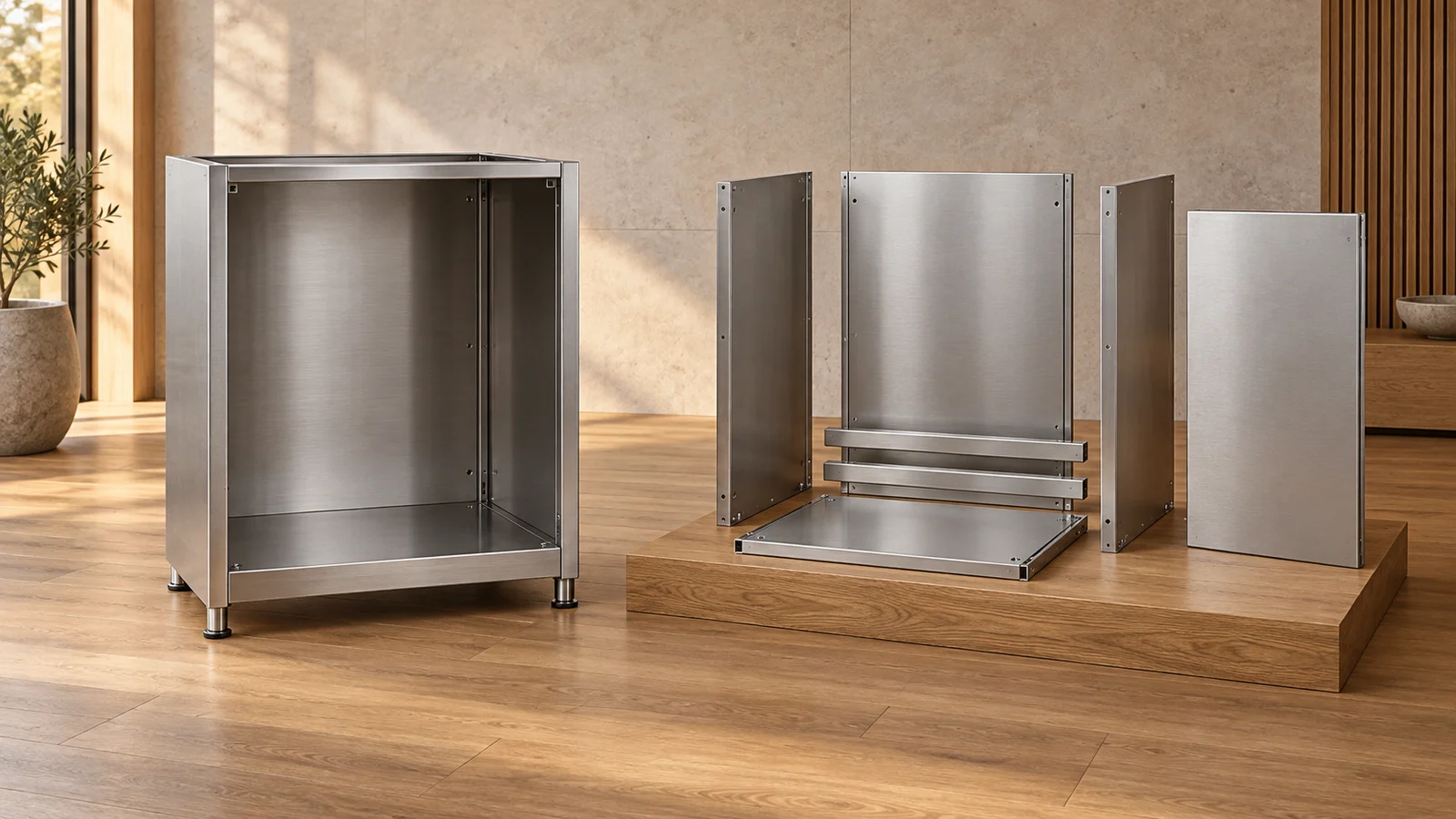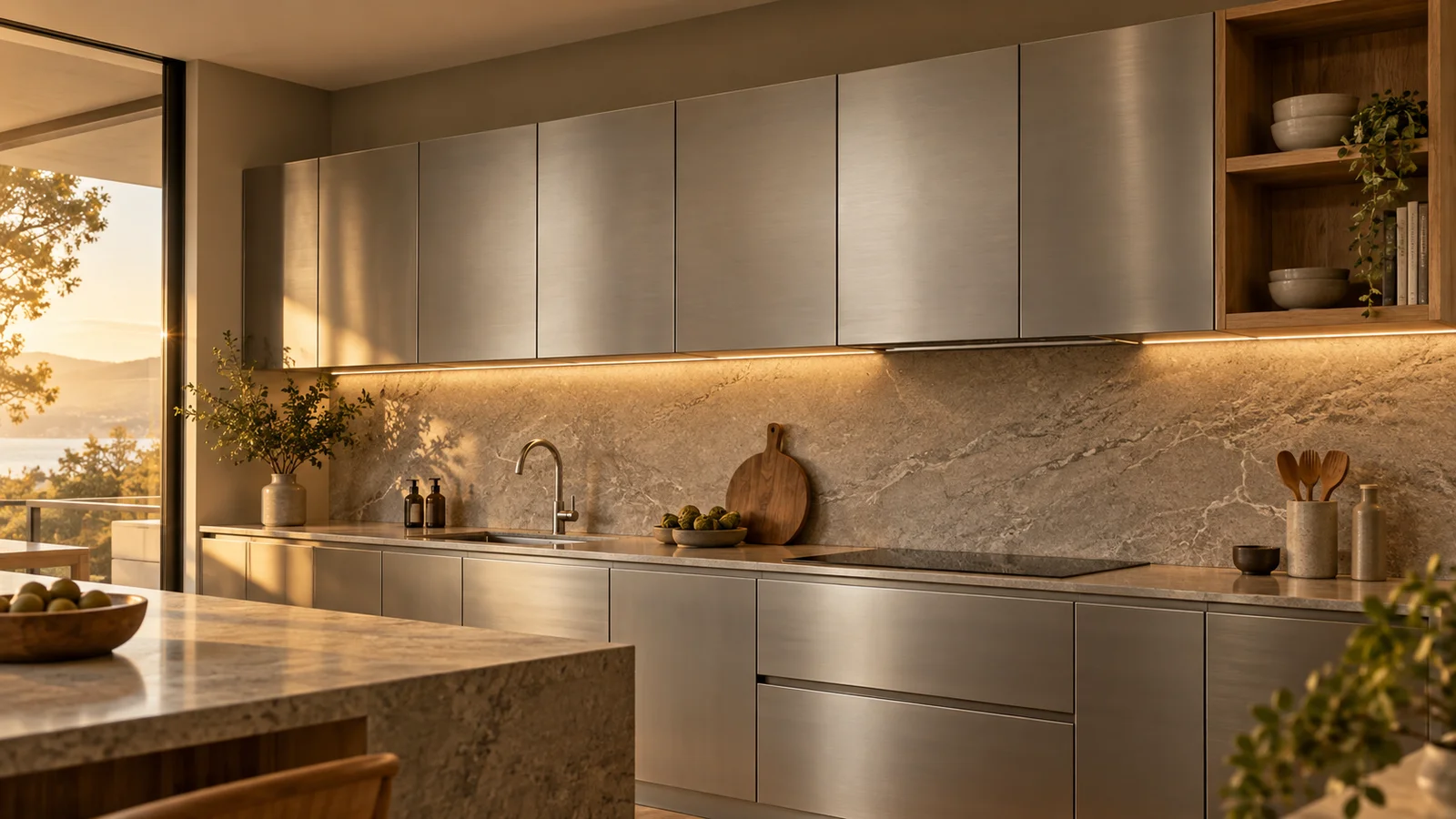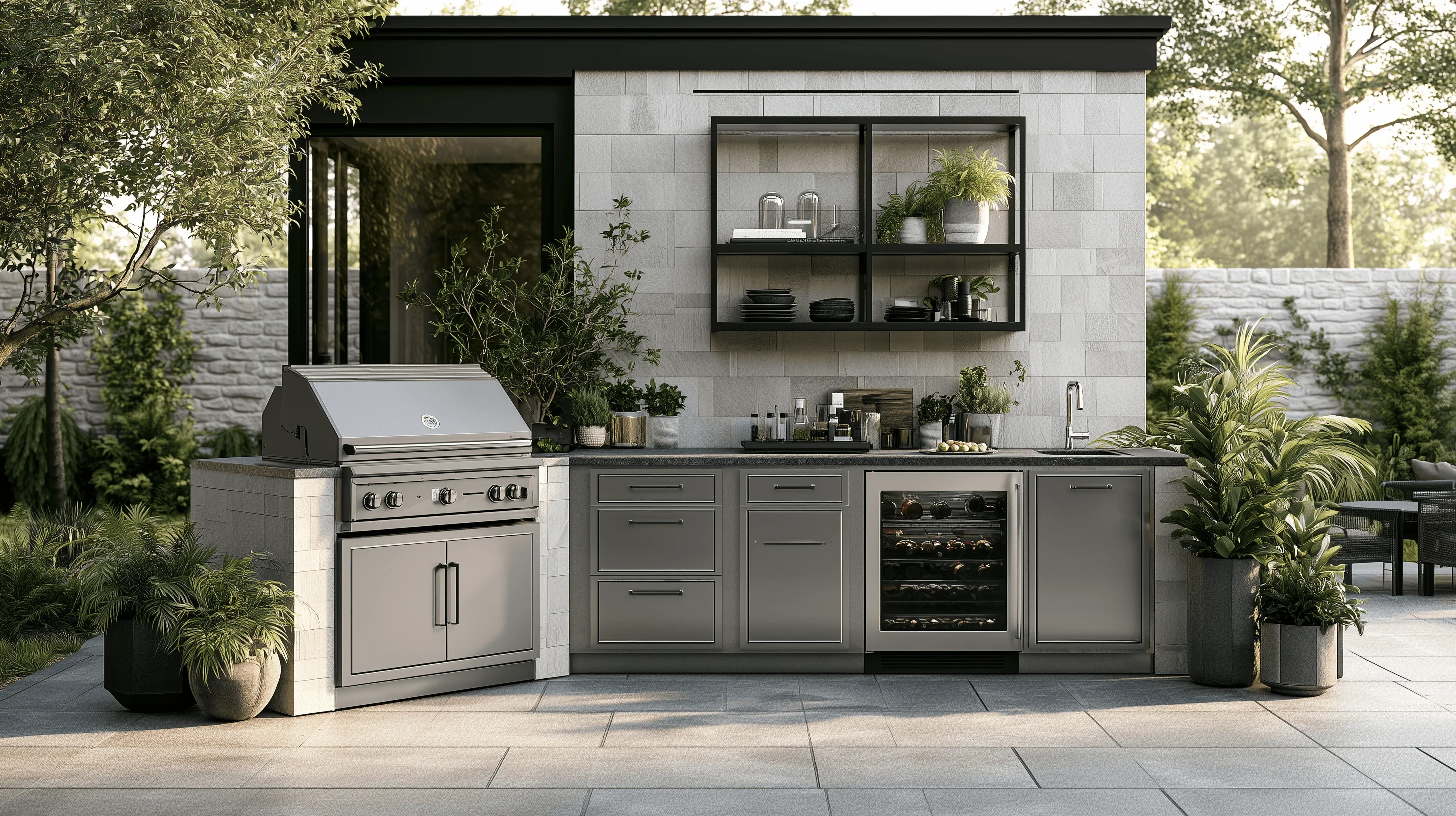
An outdoor kitchen faces everything an indoor one never will: direct sun, driving rain, freezing nights, humidity, and — near the coast — salt-laden air. Timber rots, painted board swells and peels, and ordinary steel rusts. Stainless steel is the one material that treats all of this as a normal Tuesday.
It does not absorb water
Wood and engineered board absorb moisture, then swell, crack, and grow mould. Stainless steel is non-porous — water sits on the surface and runs off. Nothing soaks in, so there is nothing to warp or rot.
It resists temperature swings
From summer heat to winter frost, stainless steel expands and contracts predictably without cracking or degrading. A Zovia outdoor unit handles the full seasonal cycle year after year.
It stands up to salt — with the right grade
This is where material grade matters. For coastal and poolside installations we build outdoor kitchens in 316 stainless steel, whose molybdenum content resists the chloride corrosion that salt air causes. Inland, 304 is usually sufficient. Choosing the grade to match the site is the difference between a kitchen that lasts five years and one that lasts a lifetime.
Build it once, in the right grade, and the weather simply stops being a problem.
Hygiene, even outdoors
Because the surface is non-porous and easy to wipe down, an outdoor stainless kitchen stays food-safe despite the open environment — no hidden seams for grease, pests, or bacteria. That combination of weatherproofing and hygiene is why serious outdoor kitchens are built in steel.