Kitchen cabinetry sits closer to daily hygiene than most buyers first realize. It is touched with wet hands, exposed to steam, cooking oil, food residue, cleaning products and repeated temperature changes. A beautiful door finish matters, but the real test is what happens around handles, drawer edges, sink zones, appliance gaps and the places that are cleaned every day.
Stainless steel does not make a kitchen clean by itself. It gives the designer and buyer a better starting point: a non-porous cabinet body that can be wiped, inspected and specified around real maintenance routines.
Start with a non-porous surface
Wood-based boards and laminates can work well in dry residential settings, but they depend on coatings, edge sealing and intact decorative layers. Once moisture reaches a weak edge or damaged surface, cleaning becomes harder because the issue moves into the substrate.
Stainless steel behaves differently. The surface is solid rather than absorbent, so spills and residue stay on a washable plane. That is why stainless steel is common in professional food-prep environments, and why it can also make sense for residential kitchens, villas, serviced apartments and hospitality projects that need durable daily cleaning.
Look beyond the door face
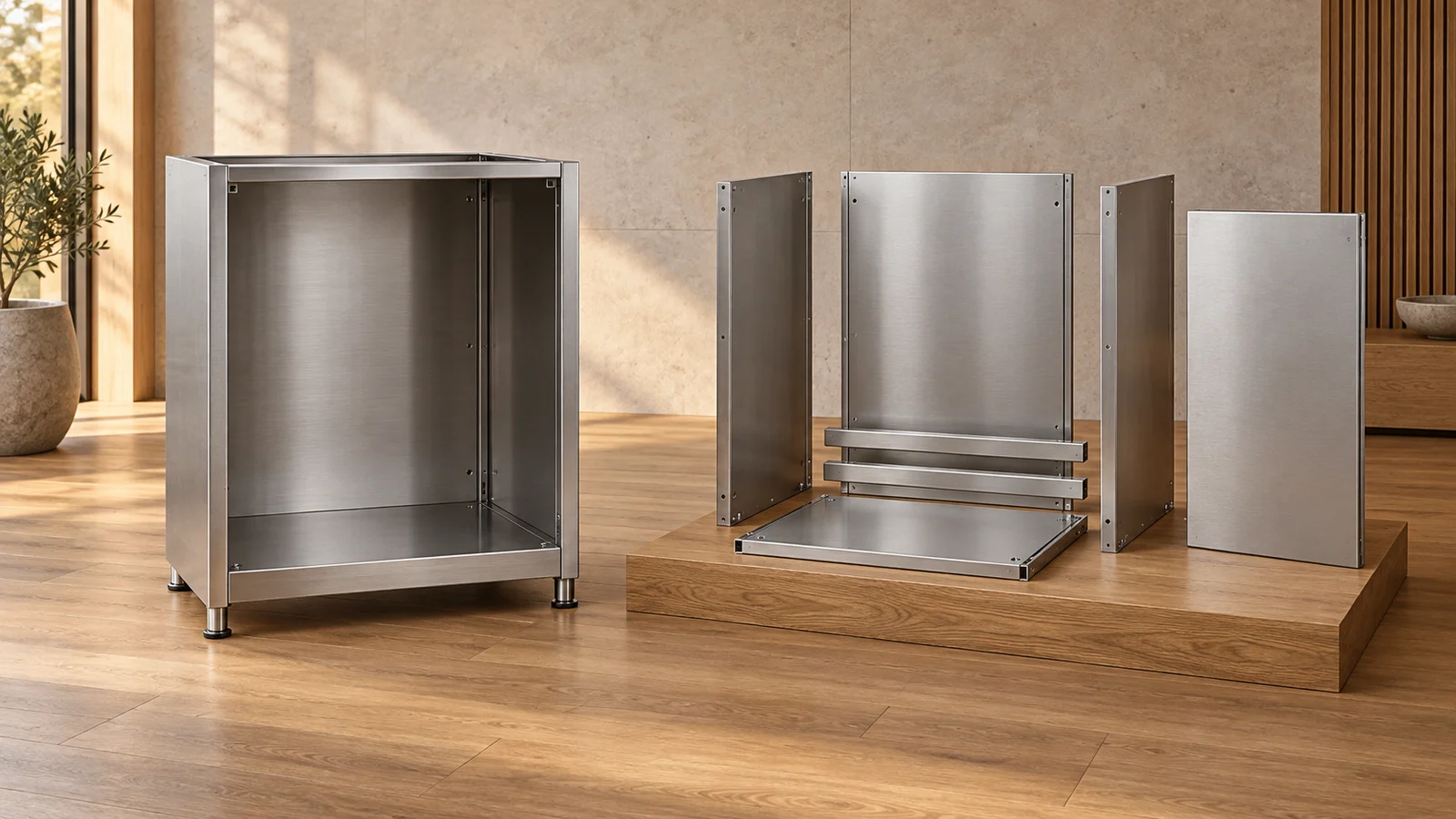
Hygiene is not only about the material name. Buyers should look at the cabinet as a set of contact points: folded edges, internal corners, drawer boxes, handle profiles, sink cut-outs, backsplash junctions and the underside of work areas. The fewer dirt traps a layout creates, the easier the kitchen is to maintain.
For Zovia’s stainless steel kitchen cabinet projects, the useful questions are practical. Where will wet prep happen? Which cabinets sit near the sink or hob? How often will the kitchen be cleaned? Are there rental, hotel or shared-use conditions that increase wear?
Match the steel to the environment
304 stainless steel is widely used for indoor cabinetry because it balances corrosion resistance, fabrication and a refined brushed finish. Where salt air, pool chemicals or stronger chloride exposure are part of the site, 316 stainless steel may be discussed because molybdenum improves resistance to chloride corrosion.
The finish also matters. A brushed surface is usually more forgiving than mirror polish because the linear grain softens reflections and helps small handling marks disappear into the texture.
The cleanest kitchen cabinet is the one that can be reached, wiped and checked without drama.
Keep warmth in the room
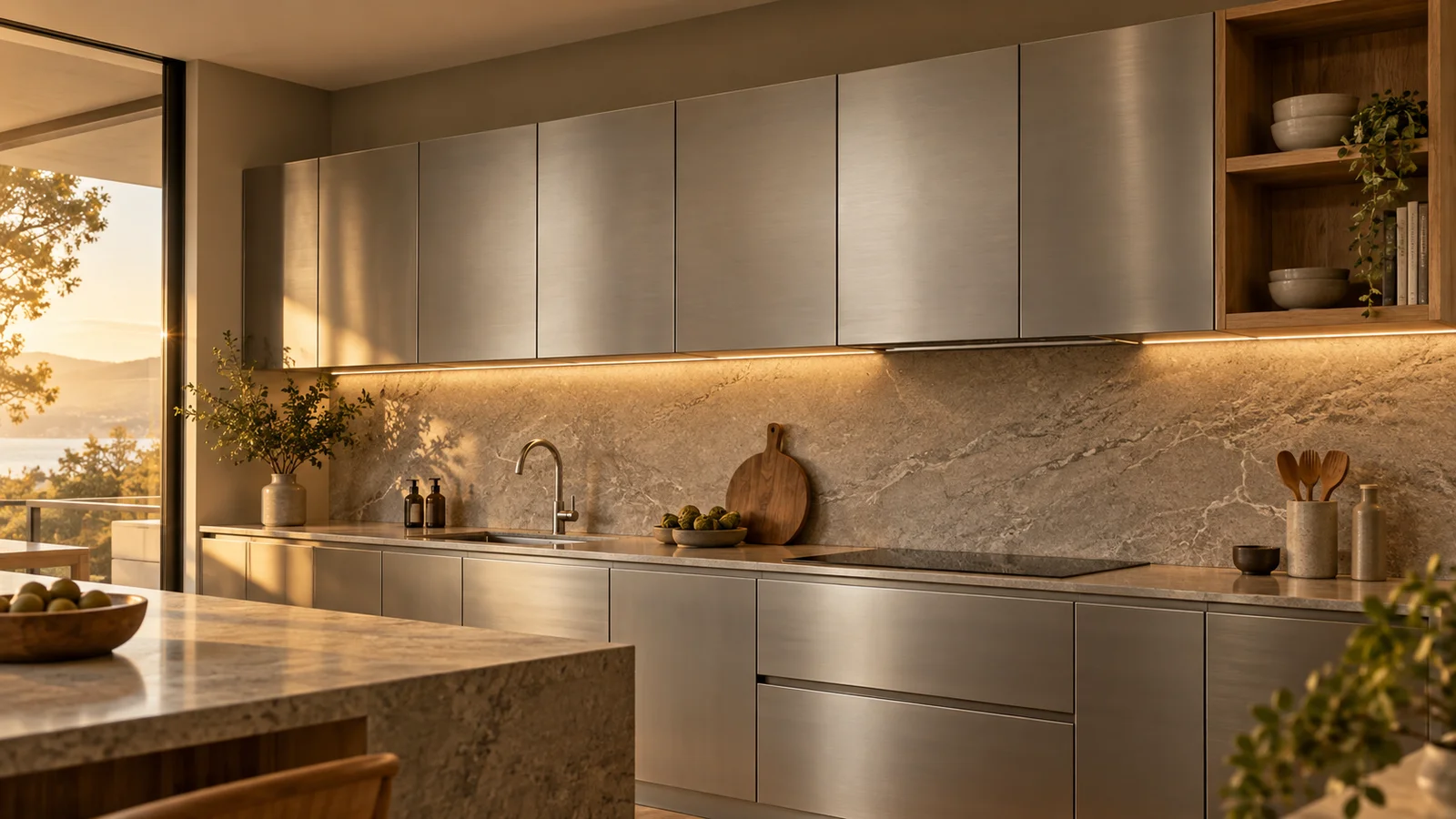
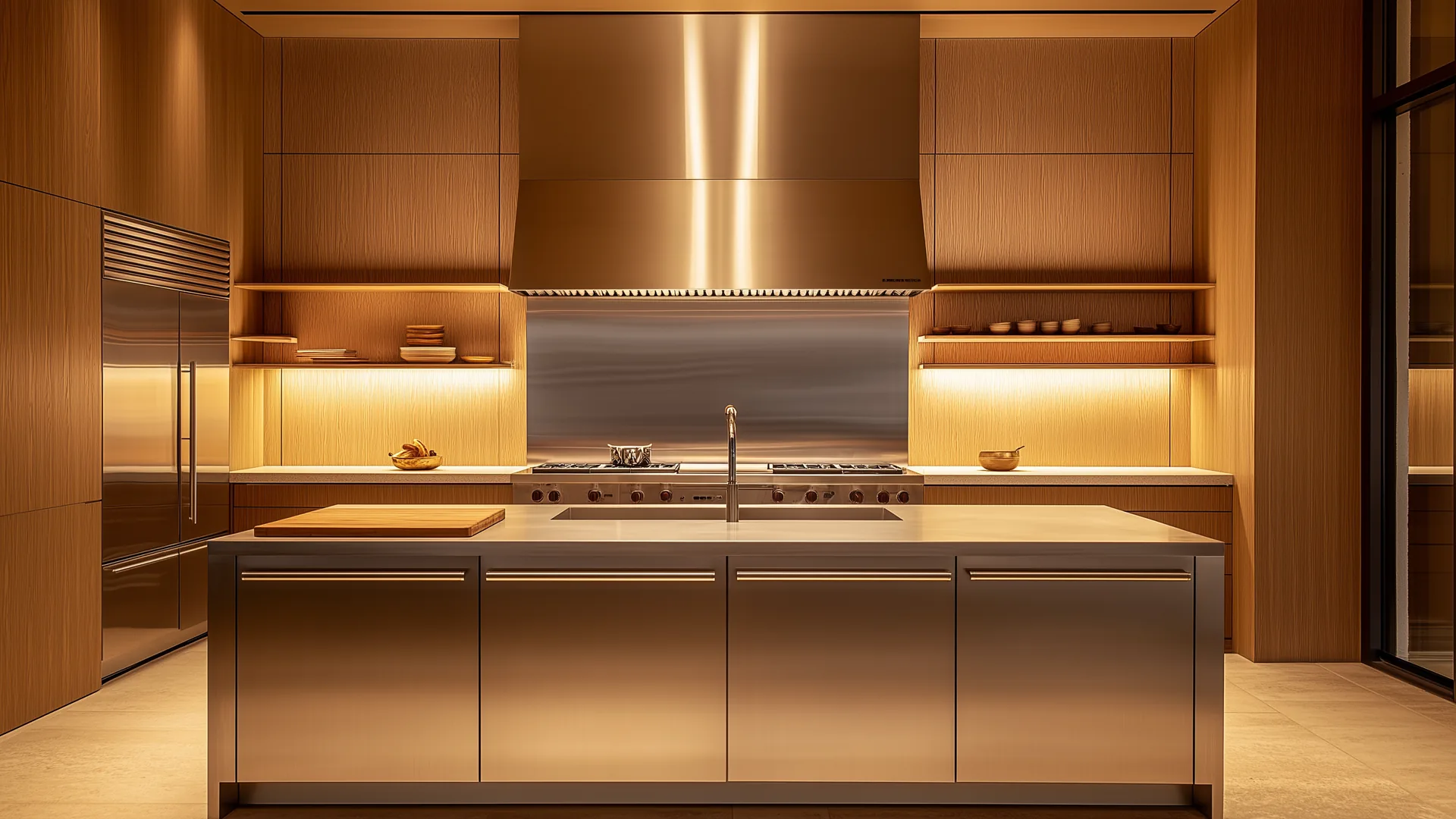
A hygienic kitchen does not need to feel clinical. Warm 2700K to 3000K lighting, timber shelving, honed stone floors, quiet hardware and a balanced island composition can make stainless steel feel calm and residential. The goal is not a restaurant back-of-house look; it is a kitchen that stays easy to live with.
Zovia’s stainless steel material system and factory approach support that balance between fabrication detail and interior atmosphere. When the cabinet body, edge details, finish and cleaning routine are planned together, stainless steel becomes more than a durable material. It becomes a sensible foundation for kitchens where hygiene, maintenance and long-term appearance all matter.