An outdoor kitchen is not just an indoor kitchen moved outside. The weather changes, the workflow changes, and the room has to serve two jobs at once: serious cooking and relaxed entertaining. A beautiful grill run can still feel frustrating if the prep space is too far away, the sink breaks the rhythm, or every tool has to be carried from indoors.
Good planning starts with the way the space will be used, then turns that workflow into cabinets, worktops, and storage.
Start with the cooking flow
The simplest way to plan an outdoor kitchen is to think in zones: storage, preparation, cooking, washing, and serving. Food should move through those zones in a short, natural sequence. Dry storage and refrigerated items sit close to the prep counter. The grill or cooktop needs landing space on at least one side. The sink should help the workflow, not interrupt it.
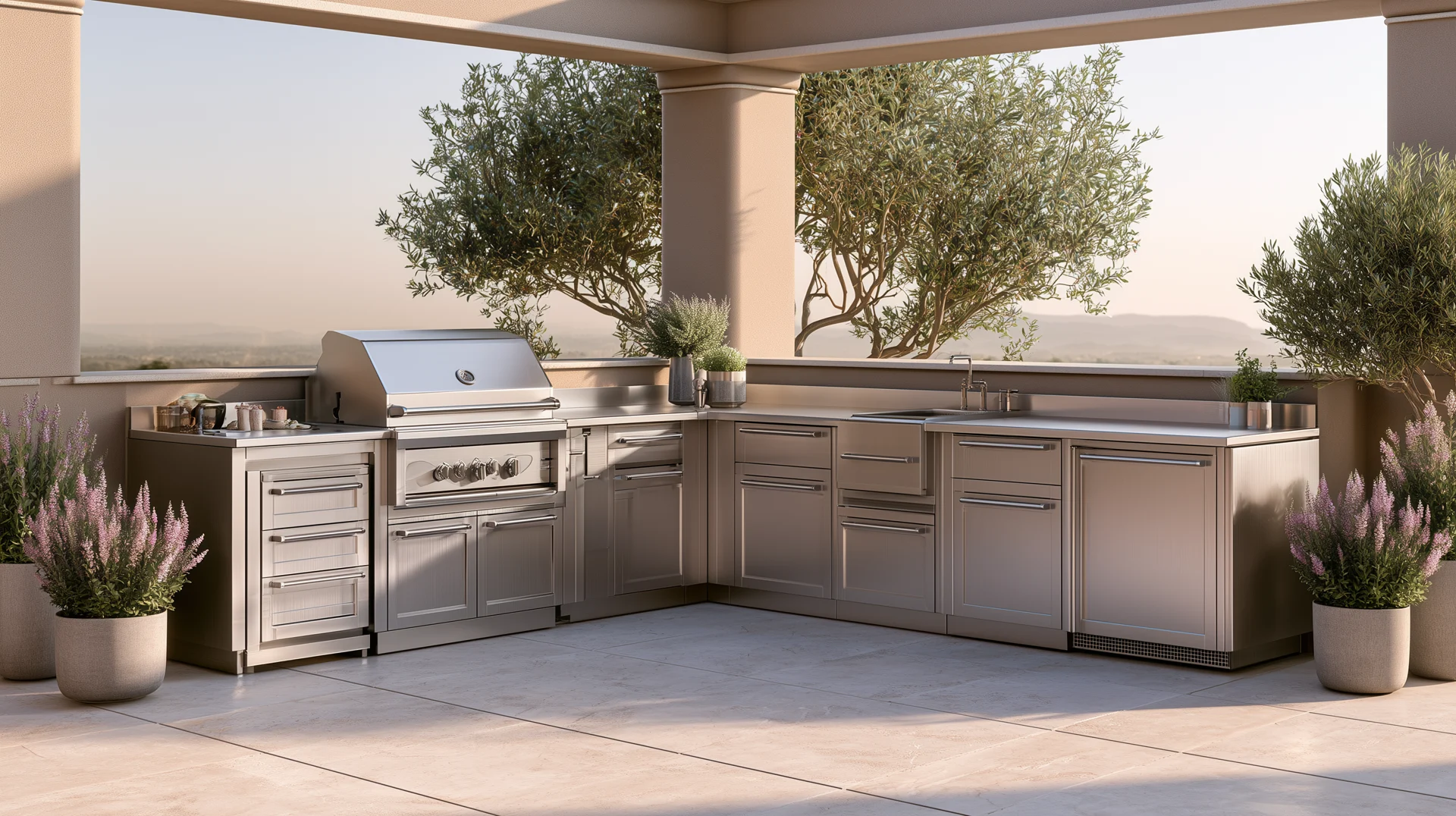
For compact terraces, a straight run can work well when every module has a clear job. For larger patios, an L-shaped layout gives the cook a protected work corner while keeping guests on the open side of the counter.
Keep the social side separate
Outdoor kitchens often fail when the cooking path and the guest path cross too often. A good layout lets people gather, pour drinks, or sit near the counter without standing directly in front of the grill or sink.
That usually means placing the serving edge toward the dining area and keeping hot equipment slightly deeper in the working zone. The goal is not to hide the cook; it is to make the space feel calm while food is being prepared.
The best outdoor kitchen layout is not the one with the most equipment. It is the one where every step feels obvious.
Test the module sequence in 3D
Before detailed drawings begin, a 3D layout can show whether the module sequence feels balanced and whether the main work zones sit in a practical order. It is especially useful for comparing a compact straight run with a longer arrangement that includes separate cooking, washing, refrigeration and storage functions.
Zovia’s 3D outdoor kitchen planner is an online outdoor kitchen design tool for this early check. Start with an official VERA combination or a blank layout, then add the five-burner grill, sink and prep station, outdoor refrigerator, side burner, Kamado and storage modules that fit the intended use. Switch between 3D, Front and Top views, compare the two front styles, and test cabinet colours with stainless steel or sintered-stone worktops.
Use the Details panel to review the module summary, then save the design on the current device or create a share link for discussion. The result remains a concept planning aid, not a production drawing. Appliance references, utilities, ventilation, clearances, final dimensions and compatibility still require project review.
Specify for exposure
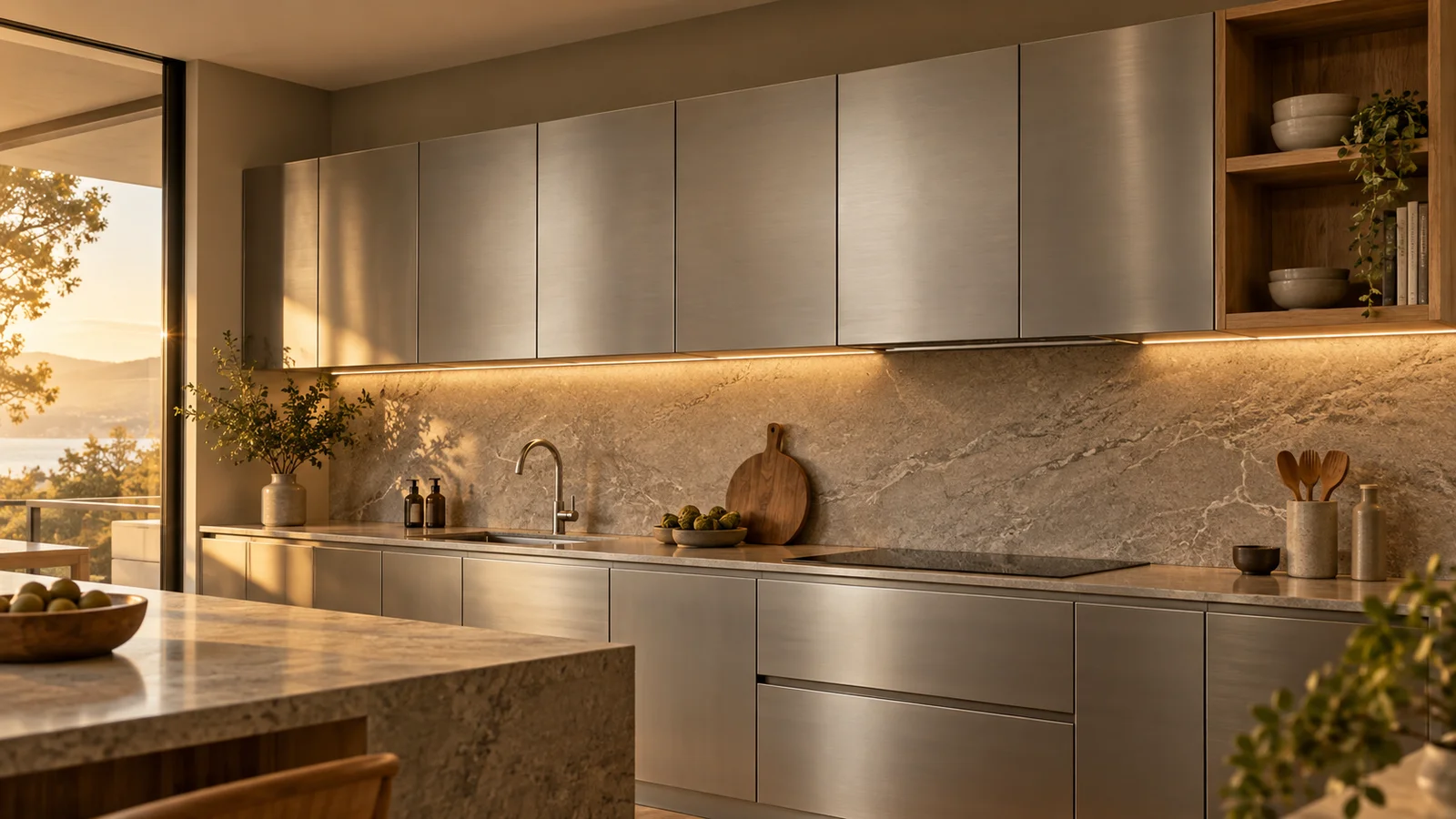
Outdoor cabinetry has to deal with sun, rain, humidity, cleaning, and, in coastal locations, salt air. Brushed stainless steel is useful because it gives outdoor kitchen cabinets a non-porous, easy-clean surface with a technical look that suits both modern homes and hospitality spaces.
Material choice should follow the environment. 304 stainless steel can be suitable for many sheltered outdoor areas. Where salt air, pool chemicals, or stronger weather exposure are present, 316 stainless steel is often the safer specification because of its improved resistance to chloride corrosion. The stainless steel material guide explains the wider specification context.
Make storage practical
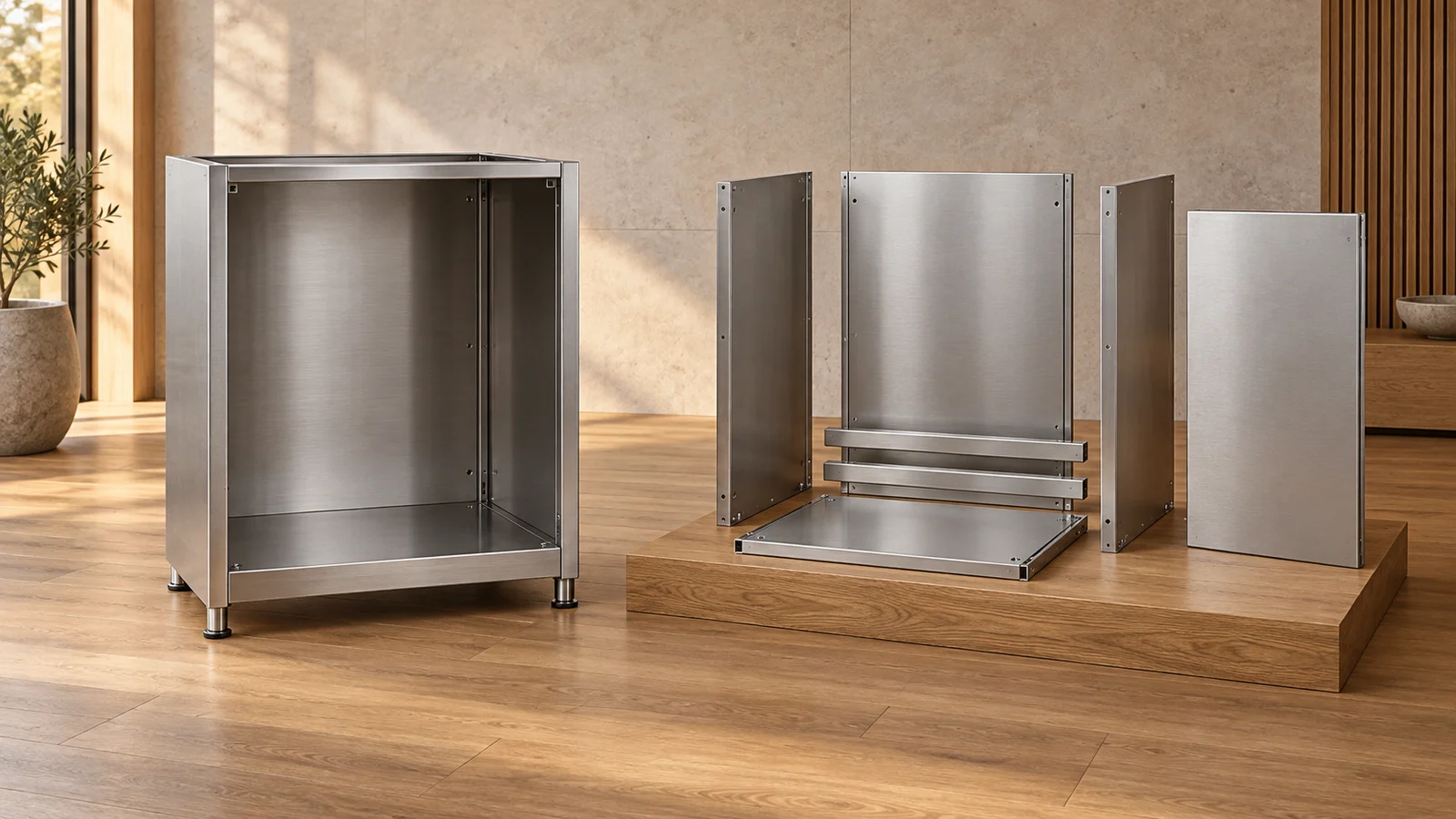
Outdoor storage should be planned around real use: grill tools near the cooking zone, tableware near the serving side, cleaning items near the sink, and closed drawers or cabinets for pieces that should stay protected between meals. Modular stainless steel cabinetry makes this easier because the run can be built around the workflow instead of forcing one fixed cabinet arrangement.
A good outdoor kitchen should look resolved on day one and still make sense after years of cooking, cleaning, and weather. At Zovia, we plan stainless steel outdoor kitchens around the site, the climate, and the way the buyer will use the space, then recommend the right grade and module combination for the project.