Every cabinet material marks differently. Painted wood can chip, veneer can swell at an edge, and mirror-polished metal can show every touch. Stainless steel is not magic, but when it is specified correctly, small signs of use become much easier to manage.
For overseas buyers comparing long-term cabinetry materials, the useful question is not “can stainless steel ever scratch?” It is “which finish will make daily wear least visible in the environment where this cabinet will live?”
Scratches depend on the surface, not just the steel
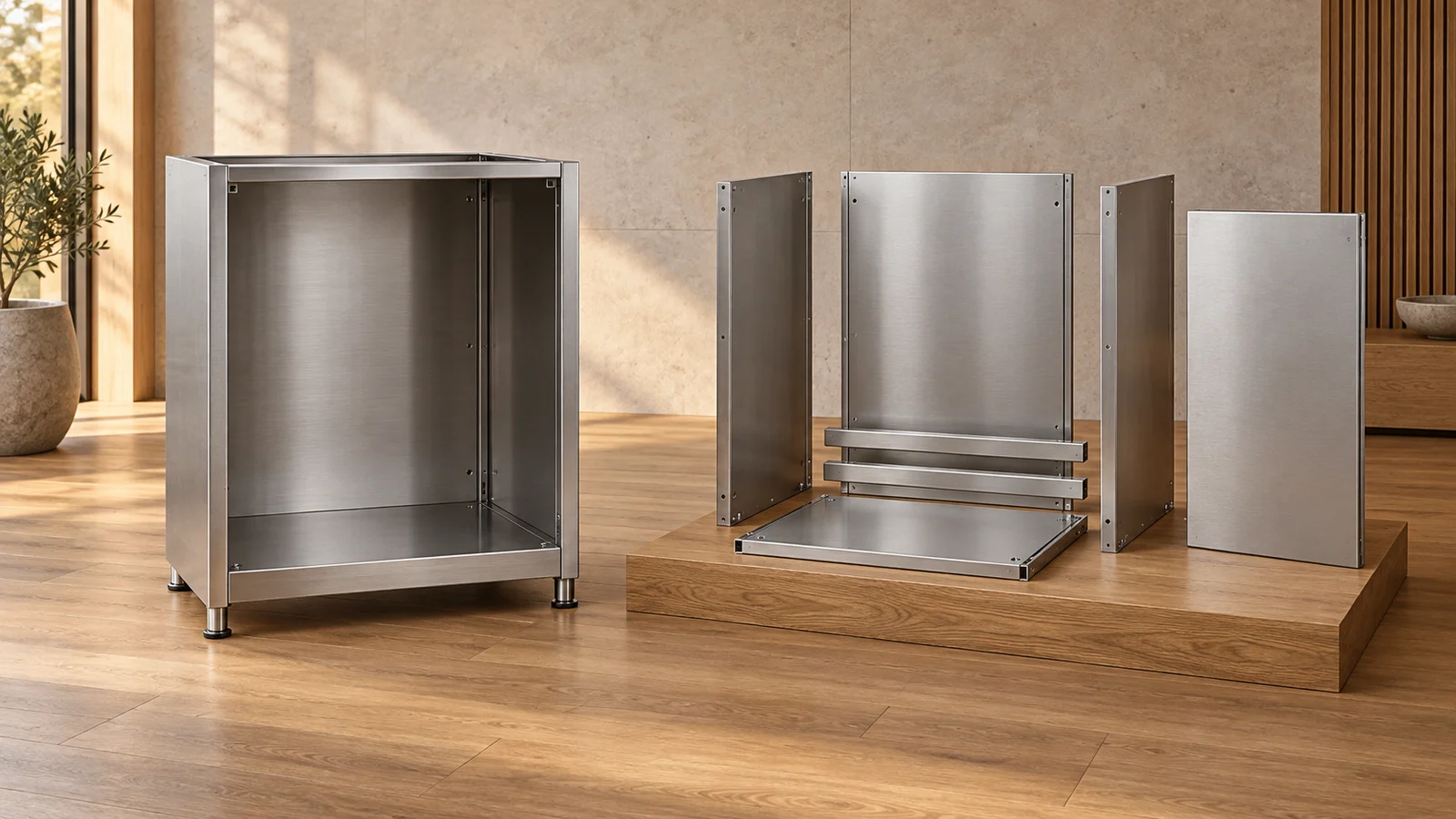
The base material matters. Zovia’s core work is built around stainless steel cabinetry, commonly using brushed 304 stainless steel for interior applications and marine-grade 316 where outdoor or coastal exposure calls for stronger resistance to chloride-rich environments.
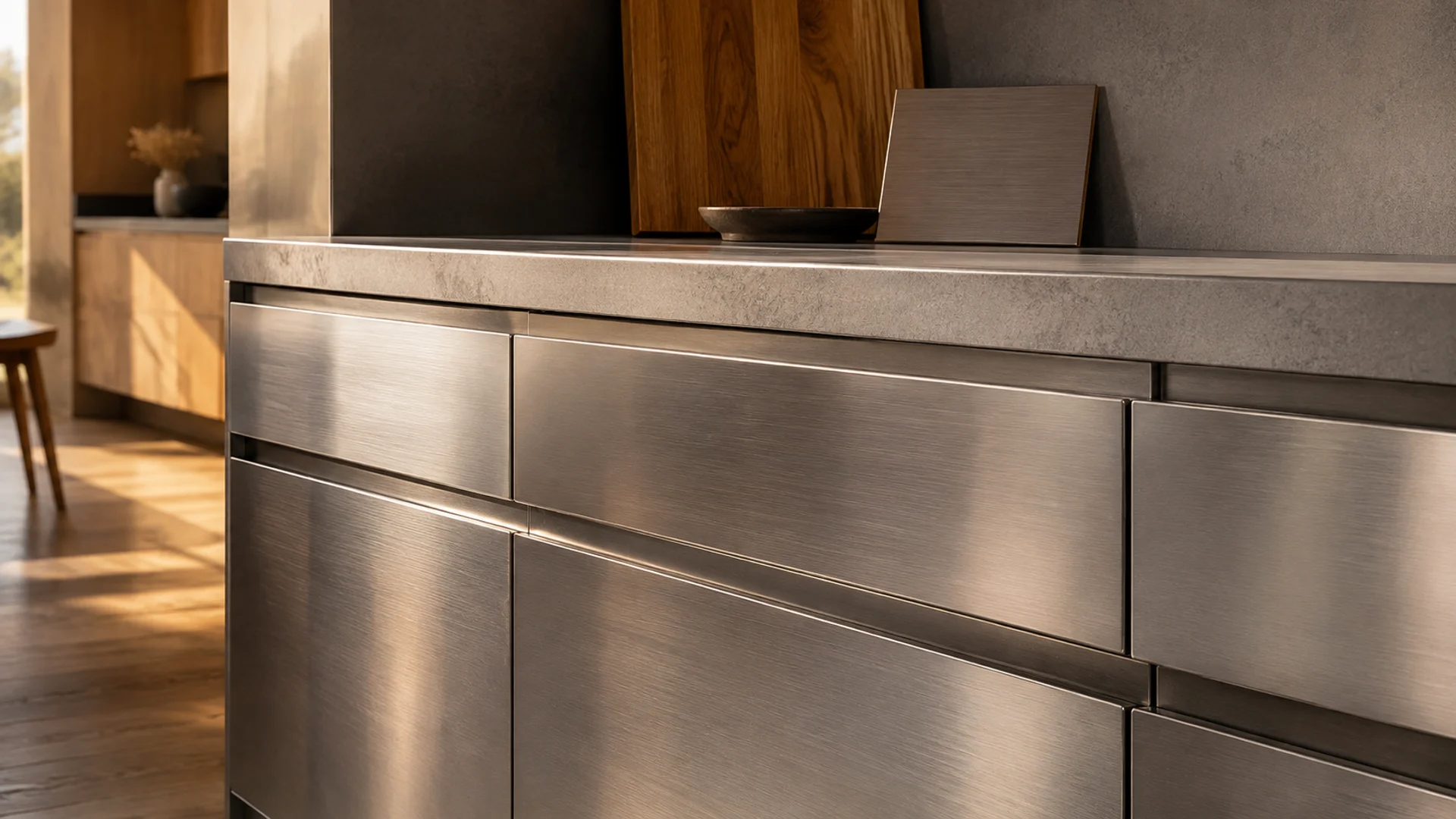
But the surface finish controls how scratches are perceived. A mirror polish reflects light sharply, so even a fine mark can stand out. A brushed finish has a directional grain that scatters light. Minor contact marks often sit inside that grain instead of fighting against it, which is why brushed stainless steel is usually the calmer choice for residential kitchens, vanities and wardrobes.
Why brushed grain is more forgiving
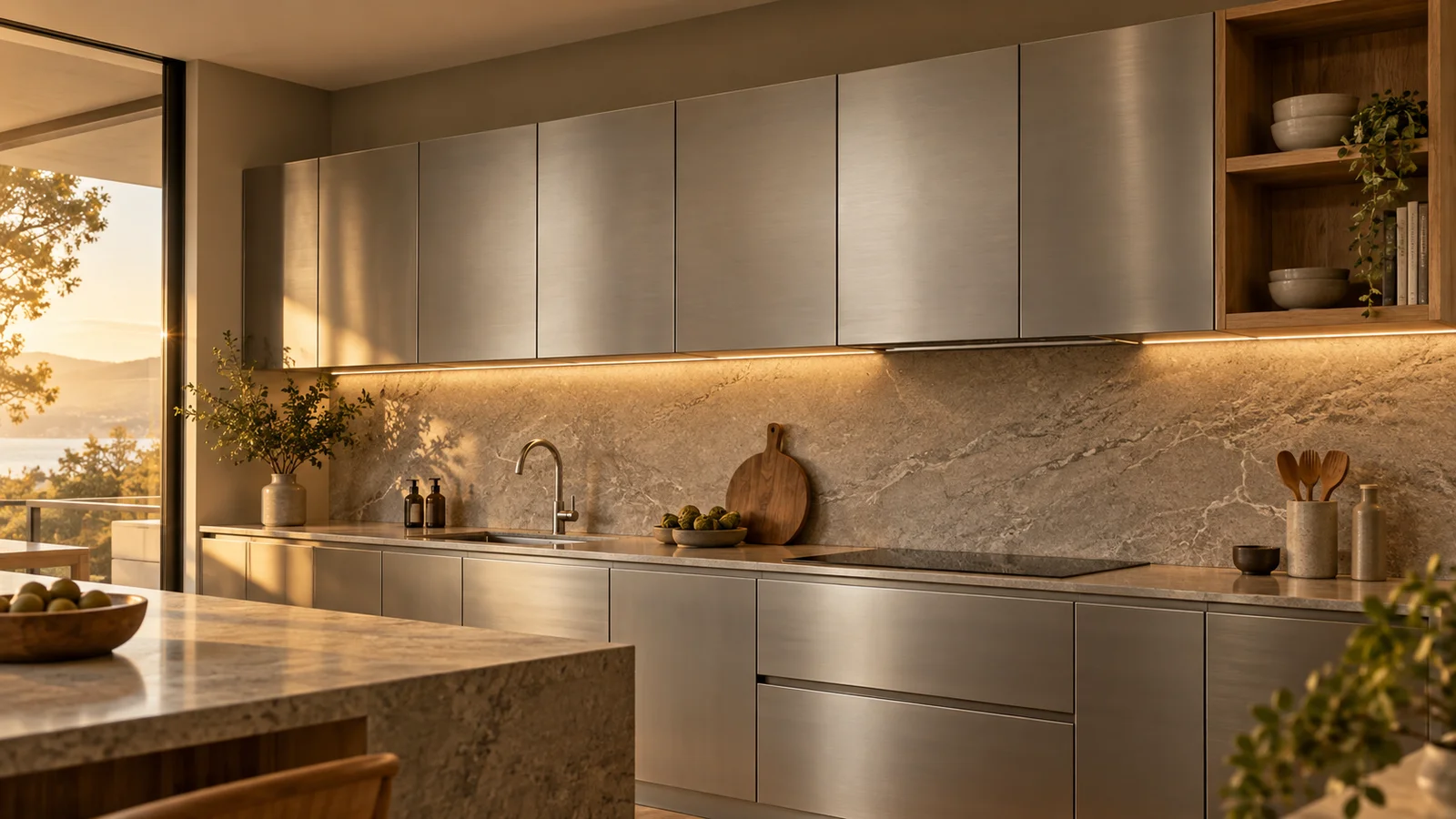
Brushing creates fine parallel lines across the metal. Those lines are not decoration pasted on top; they are part of the surface preparation. When cabinet doors are viewed under warm room lighting, the grain softens reflection, hides fingerprints better than mirror finishes, and gives the metal a more architectural character.
That does not mean buyers should ignore care. Abrasive pads, steel wool and harsh scouring powders can cut across the grain and leave obvious marks. Cleaning should follow the grain direction with a soft cloth and a non-abrasive cleaner.
A stainless steel cabinet should be specified for how it will age, not only how it photographs on day one.
Where marks usually happen
Most visible wear appears in repeated-contact zones: handle edges, drawer fronts, sink-side base cabinets, island corners and high-use preparation areas. These are the same places where wood or painted surfaces also take abuse, but stainless steel reacts differently. It will not swell from moisture or peel like a coating, yet surface direction and finish choice still matter.
For a stainless steel kitchen cabinet project, overseas buyers should review:
- A physical finish sample under lighting similar to the final room
- Handle, pull or finger-channel details at high-contact doors
- Whether exposed panels need brushed, PVD-coloured or matte surfaces
- Care instructions for the end user or project operator
What to confirm before production
Before approving a project, do not rely only on a render. Ask for the finish direction, the sample reference and the intended care expectation to be clear in the specification. If the cabinetry will sit outdoors, near salt air, or in heavy shared use, tell the supplier early so the material and finish can be selected around that reality.
Zovia can advise on finish samples, exposed faces and usage conditions across kitchens, bathrooms, wardrobes and outdoor cabinetry. Tell us where the cabinet will live and how it will be used, and we will help specify a surface that looks refined beyond the first installation photo.