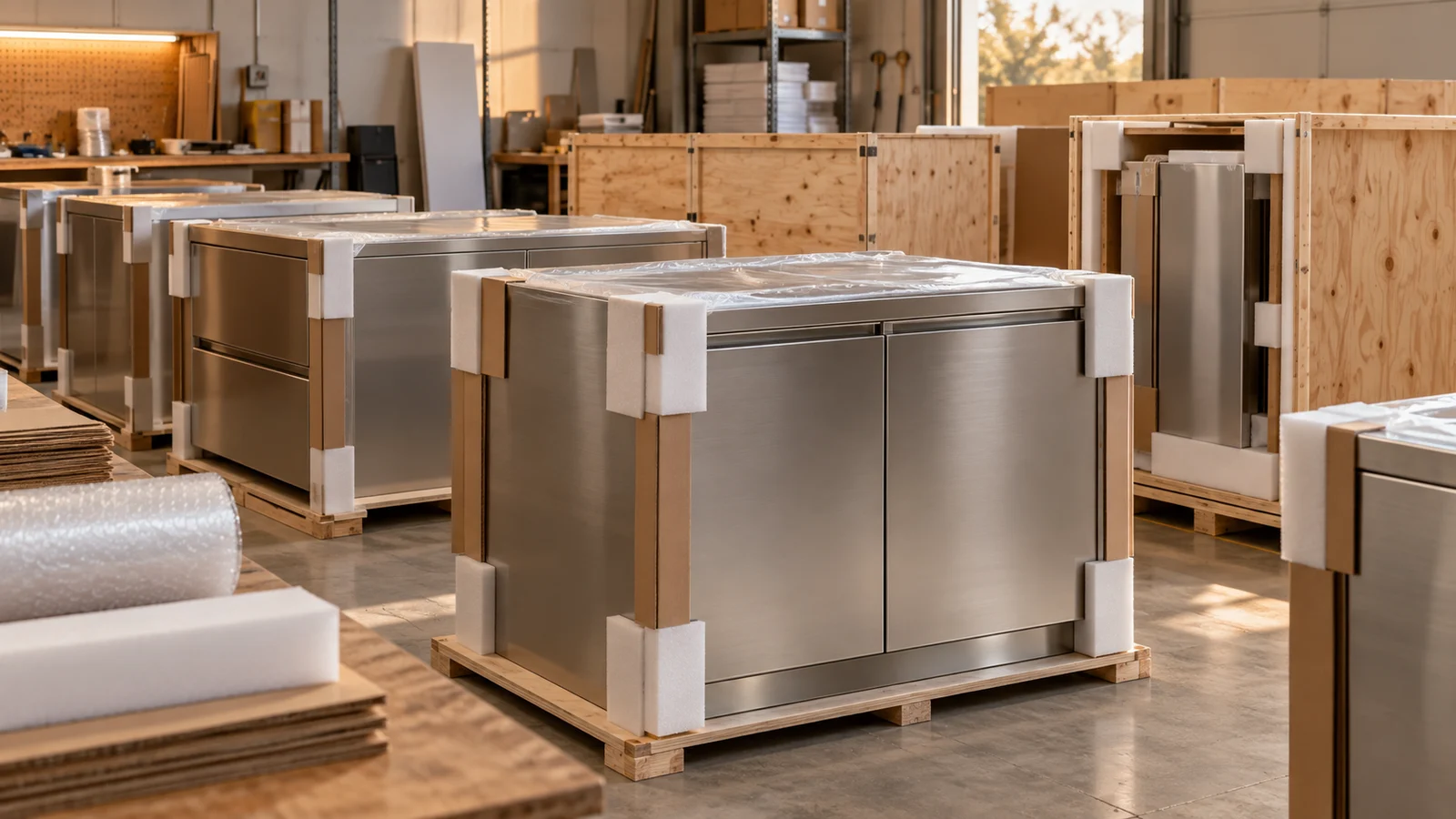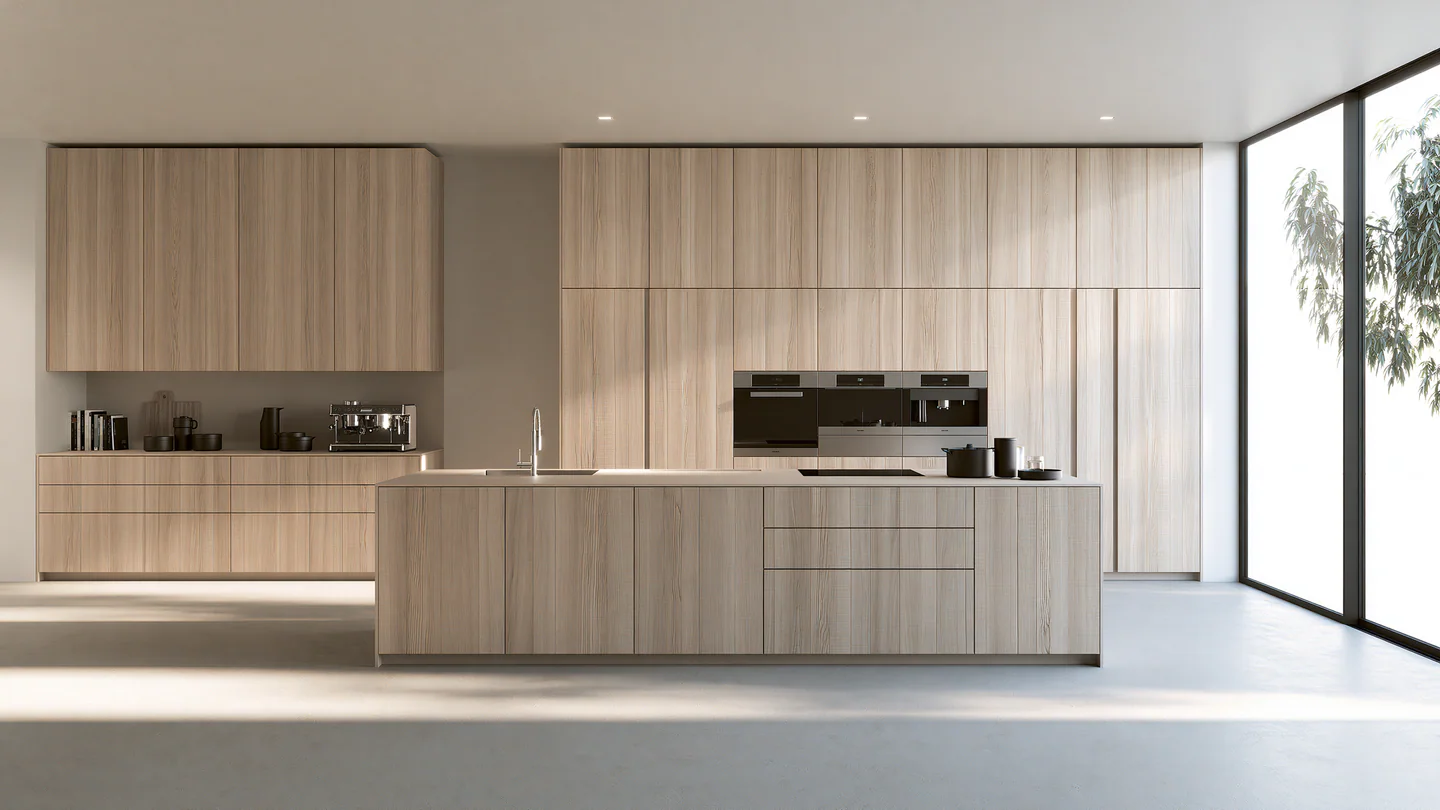
This comparison is not simply technical: material changes the atmosphere of a room as much as it changes the cabinet specification. Both stainless steel and wood can support a carefully planned interior, but they respond differently to use, humidity, finishes and visual aging.
Start with the room conditions
Begin with the actual setting, not a sample viewed in isolation. Note the room’s ventilation, cleaning routine, nearby plumbing, heat sources, daylight and likely intensity of use. A family kitchen, a hotel pantry and a display-focused apartment kitchen can ask very different things of the same cabinet elevation.
Wood responds to surrounding temperature and relative humidity. Finish systems can slow that response, but detailing, edge treatment and care still matter. Stainless steel also needs a defined finish and cleaning method. The useful question is therefore not which material wins in every room, but which one gives the project team the clearest route from drawings to long-term use.
The custom kitchen cabinet collection shows how one product family can be developed in several material directions without forcing every project into a single answer.
Where stainless steel fits well
Stainless steel cabinetry suits briefs that prioritize a precise metal expression, regular cleaning access and a strong relationship between cabinet body, fronts and work zones. It can read as professional and restrained in a brushed finish, or become warmer and more decorative through an agreed color and surface direction.
Specify more than the word “steel.” Confirm the intended environment, exposed faces, handle strategy, junctions, finish sample and care expectations. Reflections, fingerprints and small marks are perceived differently on different surfaces, so the approved sample should be viewed under lighting similar to the finished room.
Where wood fits well
Wood cabinetry brings grain, depth and a familiar tactile quality. It is especially useful when the cabinet needs to connect with floors, wall panels, furniture or an existing architectural palette. Species appearance, veneer matching, grain direction, sheen and edge details all influence whether the result feels quiet or visually active.
Humidity changes should be considered during specification. The design team should also identify areas near sinks, appliance steam and frequently cleaned zones. Those observations guide construction details and finish selection; they should not be left until installation.
Care and visual aging
Neither material should be described as care-free. Stainless surfaces need suitable routine cleaning, and the correct method depends on the mark and finish. Wood requires finish-specific care and sensible control of prolonged moisture exposure. Ask for written care guidance that matches the approved material sample rather than relying on generic advice.
Visual aging is also a design decision. Some owners appreciate a lived-in metal surface or gradual changes in natural material; others expect a more uniform presentation. Establish that expectation before approving large areas of fronts.
Choose by project brief, not by slogan
Use drawings and samples to compare the same cabinet configuration in both materials. Review body construction, visible ends, internal accessories, worktop junctions, lighting and handles together. A material can look convincing on one door and still be wrong for the complete elevation.
For a concise enquiry, send the room type, dimensions or drawings, preferred visual direction, expected use and any finish references. That gives the supplier enough context to discuss stainless steel, wood or a coordinated combination without pretending there is one universal choice.