Good cabinetry can still arrive badly if packaging is treated as an afterthought. For overseas buyers, the journey from factory floor to project site may include handling, warehousing, container loading, customs inspection and final local transport. Each step is a chance for a door edge, worktop corner or exposed finish to be marked.
Stainless steel cabinets are strong, but they are still finished architectural products. The surface grain, door alignment and visible corners need protection before the cabinet leaves the factory, not only after the container is opened.
Protect the visible surfaces first
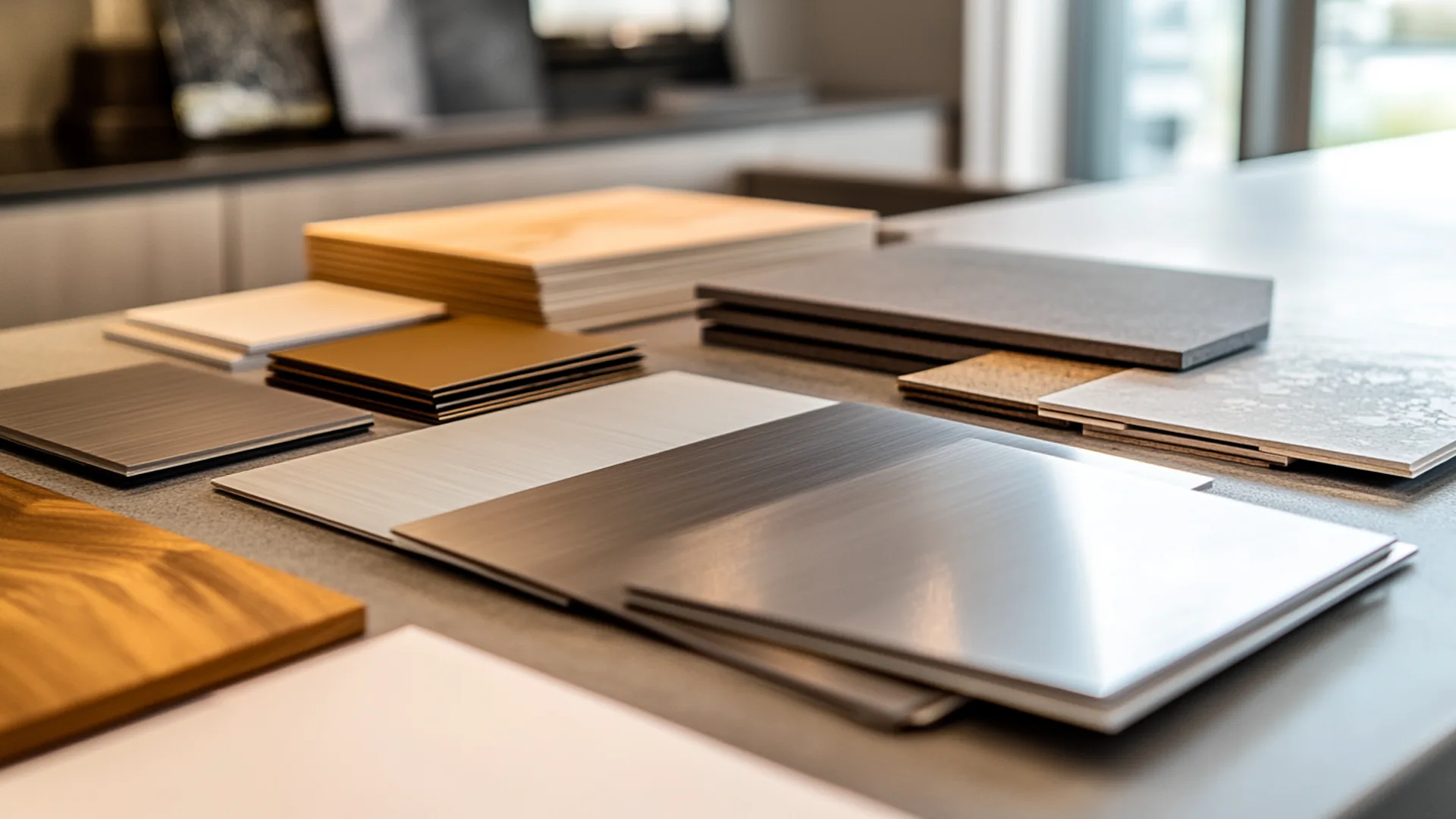
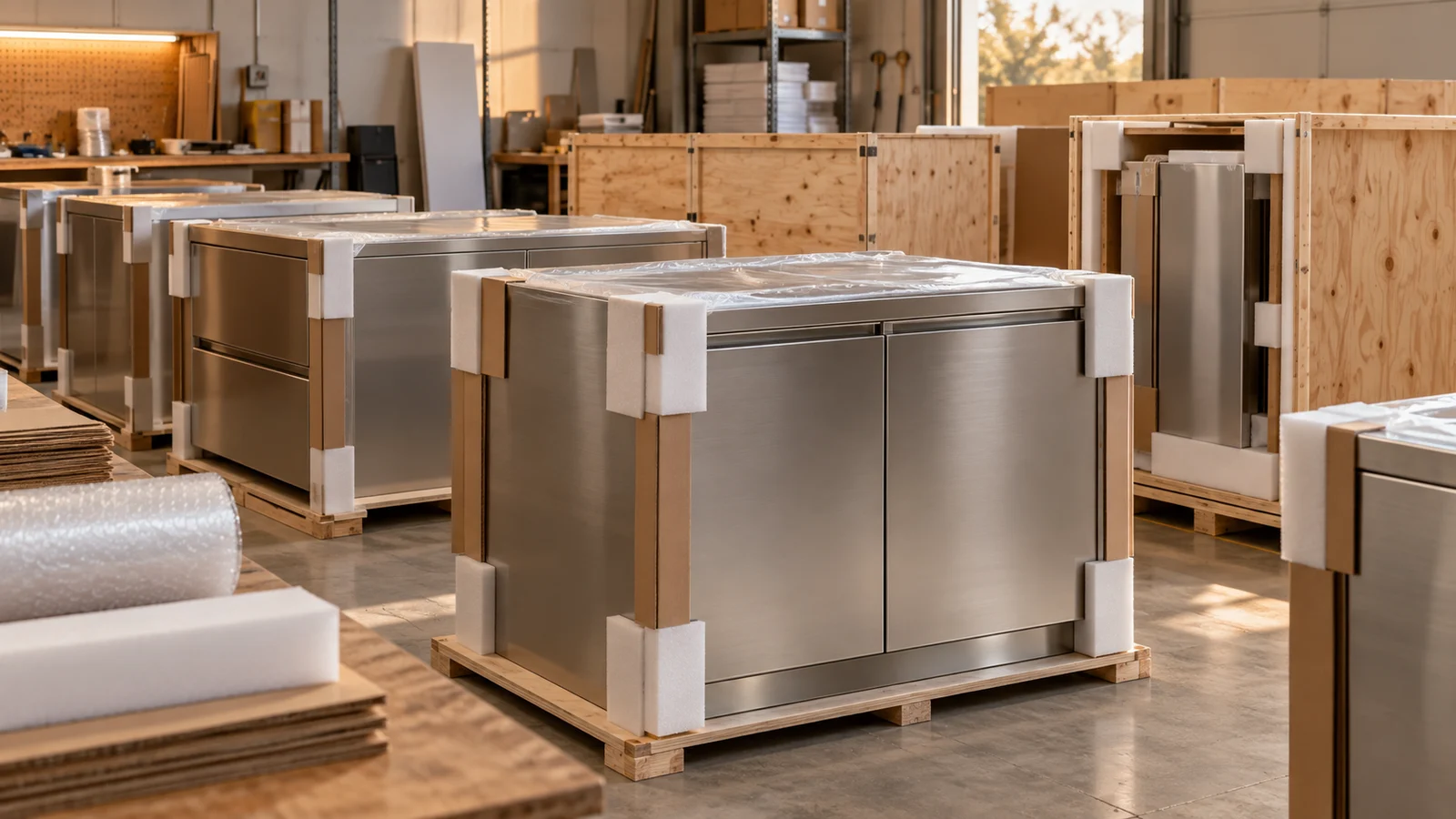
The first question is simple: which faces will be seen after installation? Brushed stainless steel doors, side panels, toe kicks and worktop edges should be protected so that the finish direction stays clean during handling. Protective film can help guard the broad surface, while foam, card or corner guards help protect edges where impact usually happens.
For a custom kitchen cabinet or outdoor project, the packaging plan should match the product type. A drawer cabinet, sink cabinet, tall wardrobe module and outdoor grill cabinet do not all need the same protection points.
Keep parts identifiable
Export packaging is also about clarity. If a project includes multiple cabinet runs, loose panels, fittings or site-assembled components, every package should be easy to identify without guessing. Buyers should ask how cartons or crates are labelled, whether the labels connect to the packing list, and how small hardware is separated from large cabinet bodies.
The goal is not decorative packaging. It is a clean system that helps the installer understand what has arrived and reduces the risk of the wrong panel being opened, moved or misplaced on site.
Confirm the crate logic before loading
Cabinets are bulky, and stainless steel surfaces do not like careless stacking. Before production is finished, overseas buyers can ask what will be palletised, what will be crated, and which items need additional spacing. Heavy pieces should not press against exposed doors or finished worktops during a long shipment.
Export packaging should protect the product and explain the project at the same time.
Photos before loading are useful. They do not replace inspection, but they give the buyer a clear record of cabinet condition, package count and visible protection before the goods leave the factory.
What to ask Zovia before shipment
A practical packaging review can stay simple. Ask for the packing approach, crate or carton count, visible protection method, and how each package will be matched to the packing list. If the project includes outdoor kitchen cabinets, sink modules or special exposed panels, tell the factory which surfaces matter most on site.
Zovia can align packaging with the cabinet type, finish and project use before shipment planning begins. Share the installation context, product mix and handling requirements, and our factory team will help prepare the cabinets for a cleaner overseas handover.