Sourcing custom kitchen cabinets from China works best as a controlled specification process, not a search for the shortest quotation. Buyers need comparable drawings, material definitions, finish samples, responsibility boundaries and communication records. Destination-country import requirements also vary, so commercial and regulatory details should be checked with qualified local parties for the specific goods and project.
Define the project before comparing suppliers
Start with room dimensions, plans, elevations, appliance information and the expected level of customization. State whether the supplier is pricing cabinets only or also worktops, sinks, lighting, hardware, internal accessories and site-related items. A vague request produces quotations that may look comparable while covering different scopes.
Use the custom kitchen cabinet page to identify the product and material direction, then describe your project conditions in your own documents. Include the destination, building type, quantity basis and decision schedule, but ask the supplier to confirm any commercial timing for the actual scope.
Make drawings and scope comparable
Issue the same drawing set and question list to each candidate. Request a line-by-line response to inclusions, exclusions and assumptions. Cabinet dimensions, fillers, end panels, toe kicks, appliance openings, service voids, handles and worktop junctions should be visible rather than buried in a general description.
Revision control matters. Put a date or revision on every drawing and record which version supports the quotation. When the design changes, ask for the affected items to be identified. This reduces the risk of approving a price against one drawing and production against another.
Confirm materials and finish samples
Material names alone are not enough. Ask which components use the named material, how visible faces differ from internal parts, and which sample controls color, texture and sheen. Photograph sample labels and connect them to the finish schedule. If natural or patterned materials are involved, agree how variation and direction will be reviewed.
The Zovia factory overview separates production systems by material. That distinction is useful in any supplier review because equipment, fabrication sequence and quality checks should follow the proposed cabinet system rather than a generic factory claim.
Set production and quality checkpoints
Agree what must be approved before fabrication: drawings, finish references, hardware, appliance data and any mock-up details. Then define useful evidence during production, such as labeled component checks, assembly views or packing lists. The appropriate checkpoint depends on project complexity and should be written into the order documents.
Ask who owns technical questions and how decisions are recorded. A named contact and a clear issue log are more useful than scattered messages. Any inspection arrangement should state its scope, timing and acceptance reference.
Review packing and communication
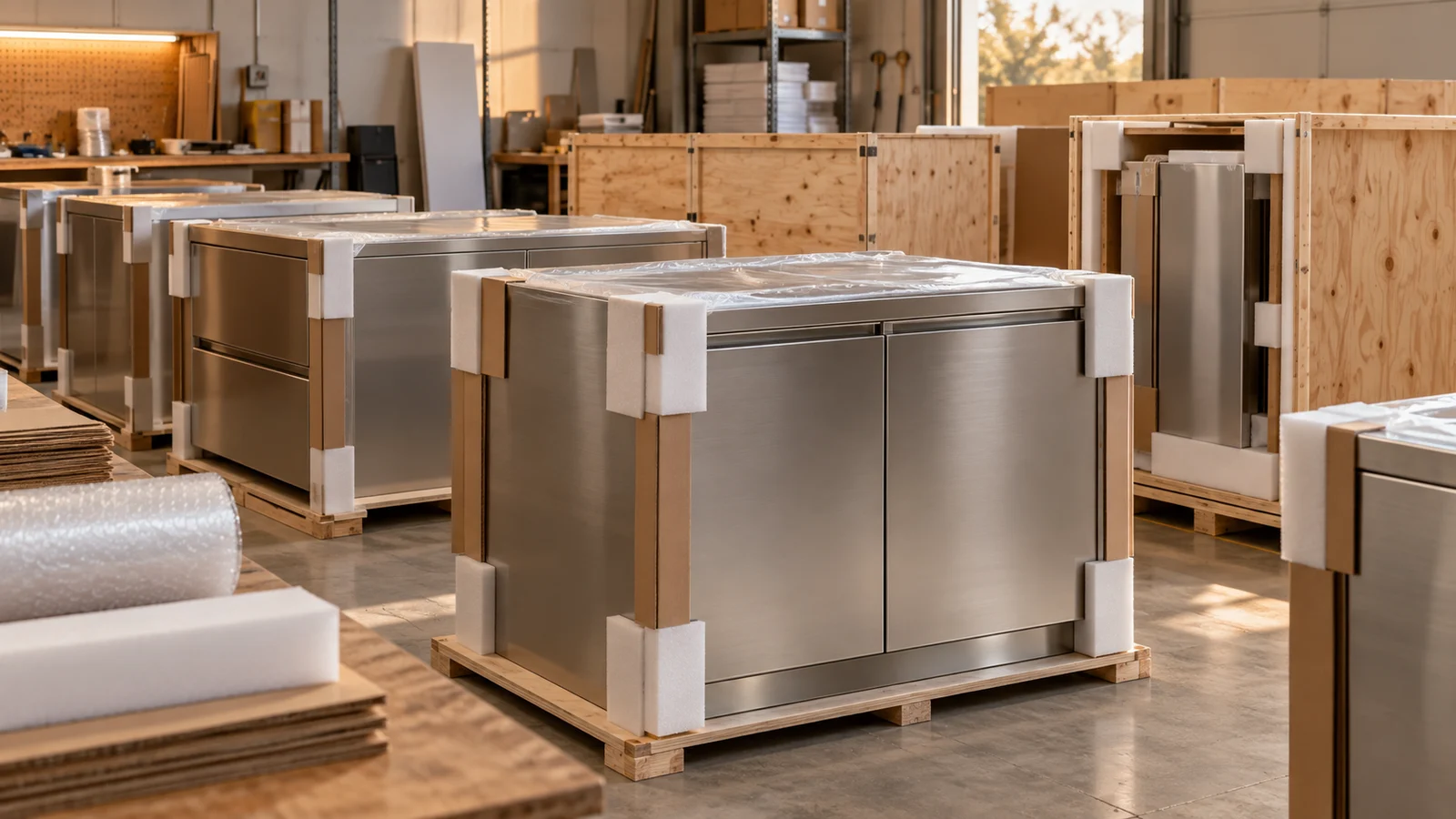
Packing should relate to the actual cabinet modules and destination handling plan. Request package identification, item lists, dimensions or weights where needed by your logistics partners, and instructions for fragile or orientation-sensitive pieces. Verify documentation requirements for the destination with the importer, broker or relevant authority.
Also plan how site questions will be handled after dispatch. Drawings, package labels and installation references should use the same cabinet identifiers so the project team can trace each item without guessing.
Send a comparable enquiry
A strong enquiry contains the latest drawings, product scope, material and finish direction, appliance schedule, destination, required documentation questions and the decision points you need confirmed. Use the project enquiry form to send that context. The goal is not to collect more promises; it is to make every response specific enough to compare.