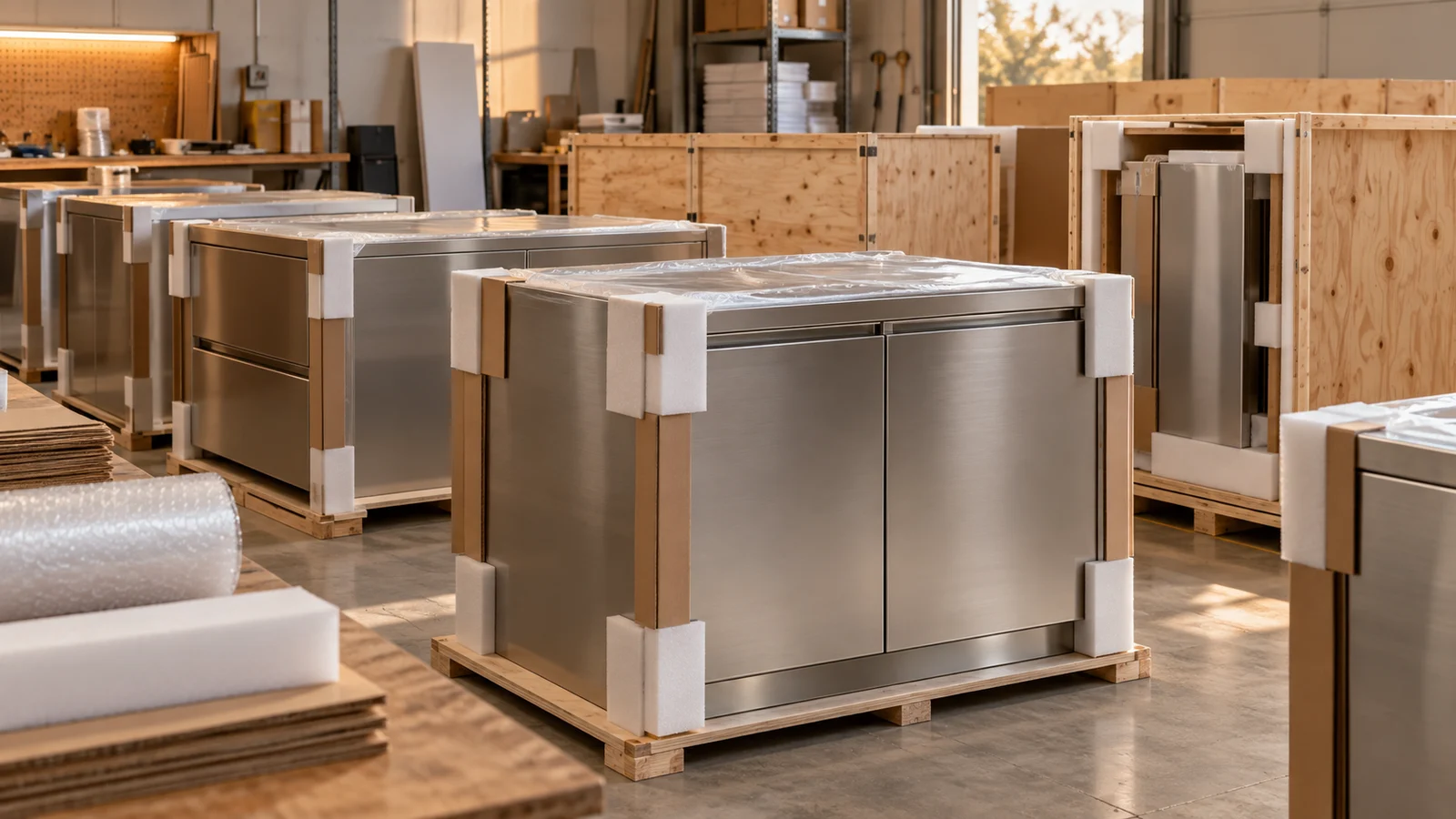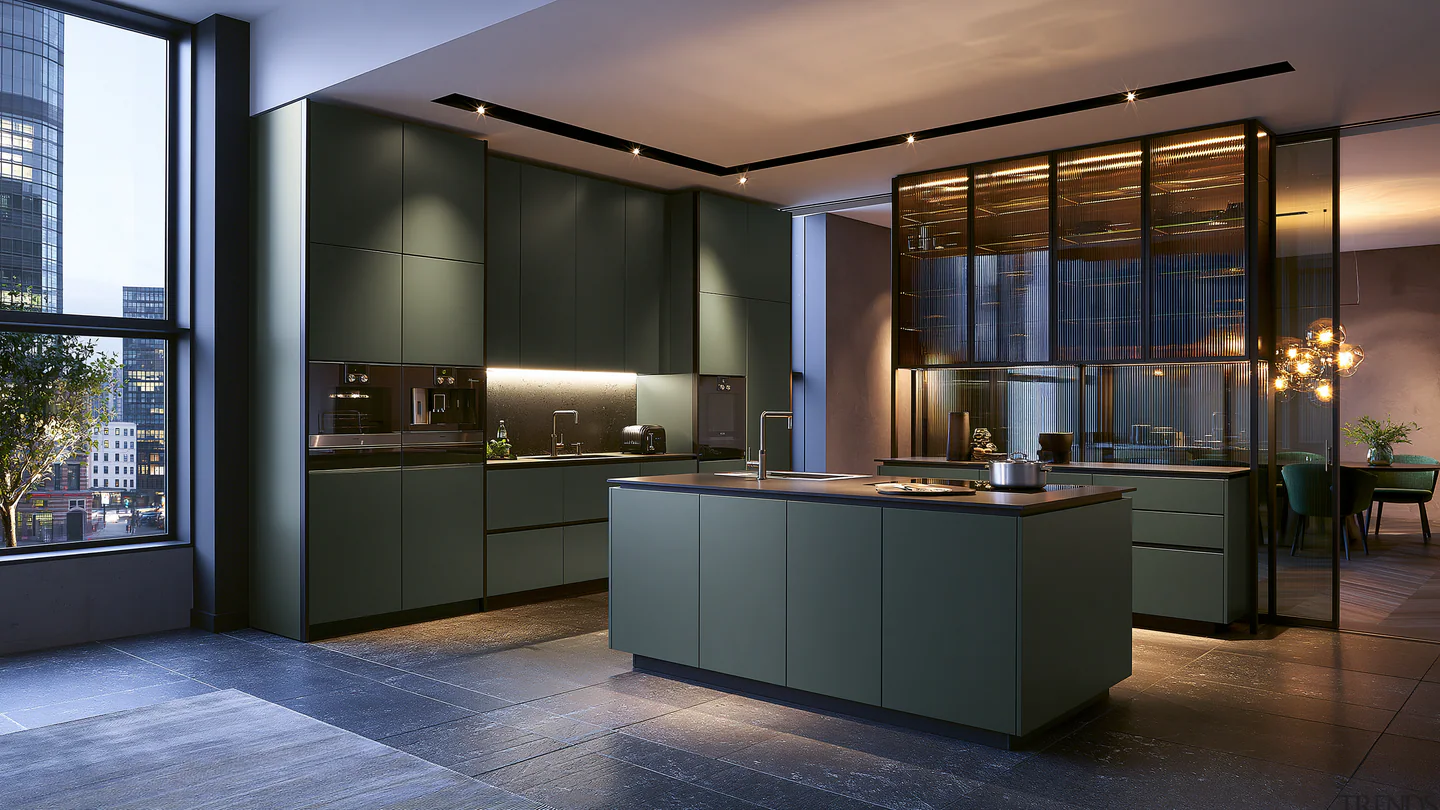
Aluminum and stainless steel both create a clean metal-led cabinet language, but they should not be treated as interchangeable labels. The final result depends on cabinet construction, finish system, exposed details, setting and care requirements. A useful comparison keeps those decisions visible instead of reducing the choice to a list of broad material claims.
Two metal directions, not one generic look
Stainless steel cabinetry often supports a continuous, precise expression across cabinet fronts, work zones and integrated details. Aluminum cabinetry can provide another controlled metal direction, particularly where framed details, slim visual lines or a specified color finish are central to the concept.
The important distinction is the complete proposed system. Ask which parts are made in each material, how visible junctions are resolved, and whether the sample represents the actual production finish. A small swatch cannot explain door proportions, corner conditions or how adjacent panels will meet.
Finish changes the expression
Metal does not automatically mean cold or industrial. Brushed, matte, colored and textured directions can produce very different interiors. Lighting also matters: a surface that looks quiet in diffuse showroom light may appear more reflective beside a window or under concentrated task lighting.
For aluminum, care guidance depends on the proposed finish system. Do not assume the same cleaning method applies to every anodized, painted or otherwise finished surface. For stainless steel, cleaning should also follow the selected finish and the type of mark. Approve representative samples and record the agreed visual standard before production.
Plan for indoor and outdoor settings separately
An indoor kitchen, covered terrace and fully exposed rooftop are not the same environment. Record rain exposure, airborne contaminants, drainage, nearby pools or coastlines, cleaning frequency and protection from adjacent trades. Then ask how the proposed cabinet and finish specification responds to that exact setting.
For outdoor work, material selection is only one part of the system. Equipment clearances, service penetrations, ventilation, water paths, fixings and maintenance access all affect the cabinet package. The custom kitchen cabinet range can be discussed against those project conditions rather than against a generic room label.
Questions to resolve before specification
Request a clear schedule showing cabinet bodies, doors, visible panels, internal fittings and finish references. Confirm which sample controls color and texture. Identify cut edges, handles, ventilation grilles and worktop interfaces on the drawings. Ask for care guidance tied to the proposed finish, and establish how replacement or additional pieces would be matched later.
For mixed-material schemes, identify every transition. Aluminum, stainless steel, glass, timber and stone can work together, but the drawing should show which material owns each junction rather than leaving it to site interpretation.
Make a project-led choice
Choose the direction that best answers the design brief and can be described consistently in drawings, samples and approvals. If a warm, colored metal expression is central, one system may offer a clearer route. If continuous stainless details and a professional work-zone character lead the brief, another may be more coherent.
A useful enquiry includes location, room type, exposure, drawings, equipment schedule, visual references and preferred finish. With those inputs, the comparison becomes specific enough to support a responsible proposal instead of a universal promise.